THE SHORT ANSWER
Amazon picks the Buy Box, its Featured Offer, from offers with a competitive total price, fast and reliable delivery, strong order experience, and stock. Since July 2026, Amazon has been removing the separate seller eligibility gate, so more resellers can compete. Amazon doesn't list brand ownership as a factor, so lasting wins come from controlling price and supply.
Amazon's own guide to the Featured Offer is written for sellers trying to win the Buy Box, and so are most of the guides that rank for it. This one is for brand owners, whose problem is different: someone else is winning the Buy Box on their own listing, often with their own product.
That got harder in 2026, when Amazon began removing the performance gate sellers had to pass before competing. Below is how the Featured Offer is chosen now, why brands lose it to resellers, the fixes that last, and how to catch a problem before it shows up in sales.
How does Amazon choose the Buy Box winner?
IN SHORT
Amazon features the most competitive offers in the Offer Display, the section near the top of a product page that shoppers call the Buy Box. Amazon's current guide says Featured Offer prices are commonly at or below the lowest priced alternatives, and it points to four levers: a competitive total price including shipping, fast and free shipping with a reliable delivery date, a strong order experience, and stock on hand.
| Factor | What Amazon's guide says | What it means for a brand |
|---|---|---|
| Price | Featured Offers are commonly at or below the lowest priced alternatives, including shipping; Amazon shows a competitive external price | A reseller below your price, on Amazon or elsewhere, can take it |
| Delivery | Fast, free shipping and a narrower delivery range help | A slow or uncertain delivery promise costs you |
| Order experience | Correct, undamaged, authentic, unexpired items and accurate charges | Weak account health hurts every offer you have |
| Stock | An out of stock item can't be featured | Every stockout hands the Buy Box to someone else |
A few rules explain what brand owners see. The Featured Offer is decided separately for each variation, and shoppers can see different Featured Offers depending on their shipping location and Prime membership. Customer reviews and star ratings don't affect selection, and with all else equal, offers with and without the Prime badge are equally likely to be featured (Amazon's help page, as reported by ChannelX). Amazon's current guide also says the Offer Display can hold one or more Featured Offers, and a listing with no eligible offer shows "See options."
Amazon holds its own retail offers to the same standard. It says that if neither it nor its sellers has an offer it's confident in, it won't feature an offer at all. For Vendor Central brands, that means Amazon's retail offer can lose the Buy Box to a reseller too.
What changed in 2026: the eligibility gate is gone
IN SHORT
In July 2026, Amazon began removing the separate seller eligibility requirement for the Featured Offer, rolling out across all Amazon stores and completing by the end of 2026 ( Amazon announcement). Before, Amazon screened sellers on performance and then ranked only eligible sellers' offers. Now every offer goes into one ranking.
Amazon says selection itself hasn't changed: it still weighs criteria such as competitive pricing, delivery speed, and performance. For brand owners, the difference is who gets into the race. New or low-history resellers no longer have to clear a performance gate before competing on your listing. Performance still counts, but inside the ranking rather than as a pass or fail filter.
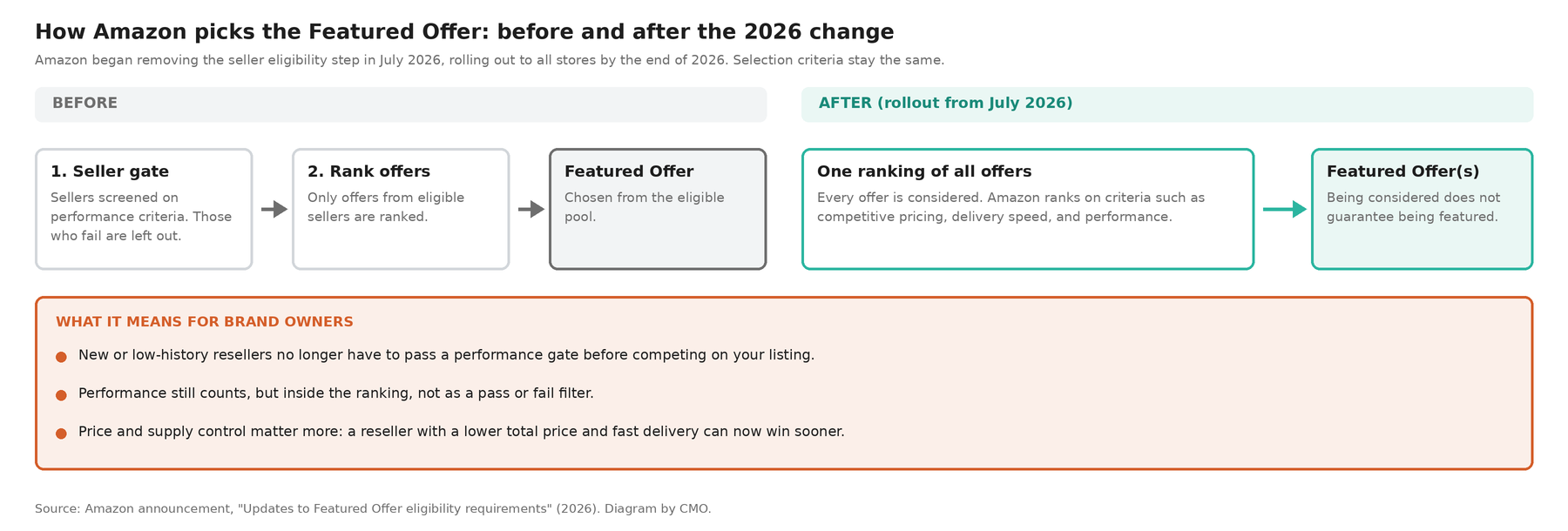 Figure 1: The 2026 change removes the seller gate; every offer now enters one ranking.
Why do brands lose the Buy Box?
IN SHORT
Amazon makes an offer ineligible for three reasons: it's out of stock, its price is too high, or its price is low enough that Amazon suspects an error. Everything else, such as a reseller priced below you or a slower delivery promise, makes your offer less likely to win without making it ineligible.
The reseller problem is the one brands underestimate. When a reseller sells genuine stock below your price, Amazon's criteria favor the reseller. That stock usually comes from your own distribution: a distributor selling outside its territory, liquidated inventory, or a retailer clearing excess. Matching the price only starts a race to the bottom, as our post on Amazon price wars explains.
Amazon's guide recommends its Automate Pricing tool to keep offers competitive around the clock. For a reseller, that makes sense. For a brand, automatically matching the lowest offer is how a reseller's price becomes your price.
| Symptom | Likely cause | Where to check |
|---|---|---|
| Buy Box drops to zero overnight | Stockout, or a price flagged as too high or too low (ineligible) | Manage All Inventory, Pricing Health |
| A reseller wins most of the time | Reseller priced below you (less competitive, not ineligible) | Other sellers on the listing |
| "See options" replaces the Buy Box | No offer eligible to be featured | Pricing Health, Pricing Opportunities tab |
| Buy Box lost to a seller you don't recognize | Unauthorized or counterfeit offer | Test buy, then Brand Registry |
Can unauthorized sellers take my Buy Box?
IN SHORT
Yes. Amazon doesn't list brand ownership among its Featured Offer criteria, and with the eligibility gate removed, a new reseller only needs the stronger offer. An unauthorized seller with a lower total price and fast delivery can win the Buy Box on your listing, even with genuine product your contracts never authorized for Amazon.
Removing them takes more than a report to Amazon. Genuine products from an unauthorized seller usually aren't an IP violation, so you need to find where the stock comes from and close the leak. Our unauthorized resellers guide covers the full process, and our guide to removing unauthorized sellers covers enforcement. Counterfeits are different: Brand Registry and Project Zero let eligible brands remove counterfeit listings directly.
Does FBA help win the Buy Box?
IN SHORT
Not on its own. Amazon's guide says fulfilling orders yourself can be just as effective as FBA, and its help page says offers with and without the Prime badge are equally likely to be featured when everything else is equal. What matters is fast, free shipping with a reliable delivery date.
FBA helps indirectly by handling customer service and returns, which supports the order experience. If your own fulfillment can't promise fast, certain delivery, FBA is often the simpler way to meet the bar.
How to win back the Buy Box as a brand owner
IN SHORT
Win it back by fixing what Amazon measures, then removing the sellers who undercut you. Matching every reseller's price only lowers the price everyone competes at.
- Keep stock in place. Plan inventory so your offer is never out of stock on top ASINs. A stockout makes your offer ineligible.
- Tighten delivery. Offer fast, free shipping with a narrow delivery window, through FBA or your own fulfillment if it can match.
- Hold one price across channels. Amazon shows a competitive external price, so a lower price on your website or at a retailer can work against your Amazon offer. Amazon doesn't enforce MAP; brands do, through seller agreements, monitoring, and selective distribution. A written MAP pricing policy is the starting point.
- Find and close the supply leak. Run test buys, trace which distributor or retailer supplied the reseller, and enforce your distribution agreements.
- Remove counterfeits and hijackers. Use Brand Registry and Project Zero for counterfeits, and see our listing hijacking guide for unauthorized listing changes.
- Protect account health. Ship correct, authentic, undamaged items and keep charges accurate, because order experience applies to every offer.
The Buy Box affects advertising too. Amazon requires a product to be eligible for the Featured Offer before it can be advertised with Sponsored Products, so Buy Box problems can quietly limit your ads as well.
Case study: recovering the Buy Box from resellers
IN SHORT
A brand came to CMO with nine unauthorized sellers on its primary ASINs. Several were undercutting MAP by 15 to 25% and winning the Buy Box on its two top-selling ASINs, pushing the brand's Buy Box ownership down to 52% on the primary ASIN and 38% on the second.
CMO audited every seller and documented the highest-volume violators with test purchases. The case split exactly along the line described above. Two sellers showed counterfeit indicators and were handled through IP violation reports in Brand Registry. The rest were gray market resellers selling outside the brand's distribution agreement, and those were handled through direct outreach ( CMO brand protection).
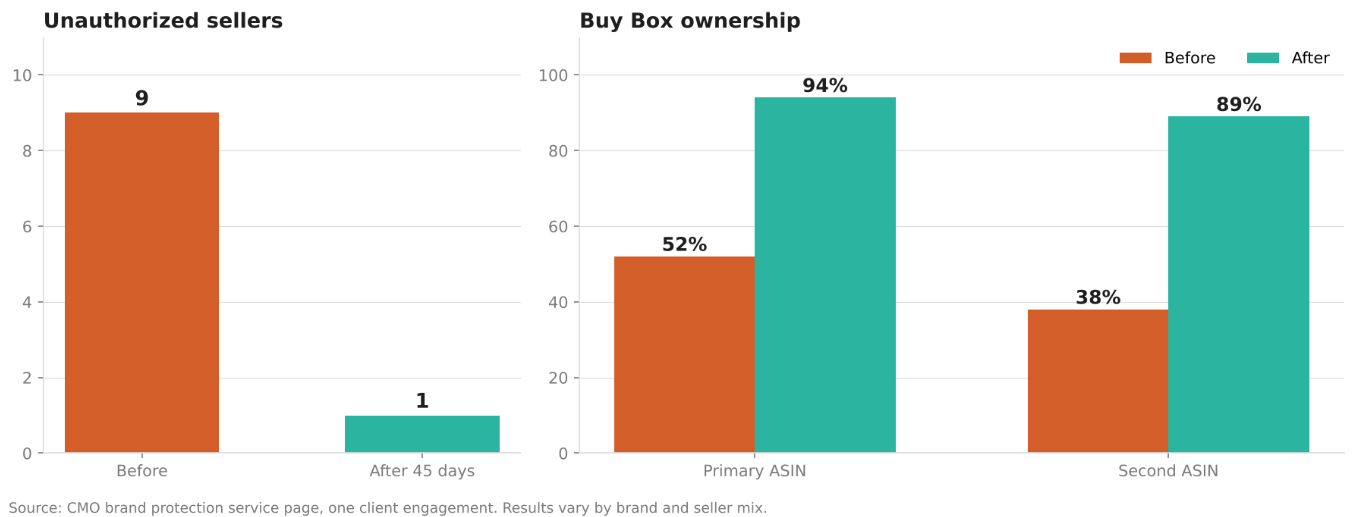 Figure 2: Unauthorized sellers fell from 9 to 1 within 45 days; Buy Box ownership recovered to 94% and 89%.
How to monitor the Buy Box
IN SHORT
Monitor the Buy Box weekly at the ASIN level, and investigate any sharp drop the same day. Brand owners have four places to look. Rely on the reports, because what you see on the product page depends on your own location and Prime status.
| What to watch | Where to find it | What it tells you |
|---|---|---|
| Featured Offer (Buy Box) Percentage by ASIN | Seller Central Business Reports, Detail Page Sales and Traffic by Child Item | How often your offer was featured over a period; check the column's tooltip for exactly what it counts |
| Whether you're featured right now | Seller Central Manage All Inventory, Price and shipping costs column | Your current status per listing |
| Offers that can't be featured | Seller Central Pricing Health, Pricing Opportunities tab | Pricing problems blocking eligibility |
| Who else is selling | The product page, "Other sellers on Amazon" | New or returning resellers |
Set a trigger: if the Featured Offer percentage on a top ASIN falls well below its normal level, check stock, price, and the seller list before anything else.
FROM THE CMO DESK
Across 16 years and more than 100 brands, one pattern holds. A brand that matches every reseller's price ends up teaching the market a lower price. The lasting fix is finding where the reseller's stock comes from. Once supply is under control, the Buy Box usually follows.
Resellers winning your Buy Box?
Start by finding out who they are and where their stock comes from. CMO's Amazon brand protection team monitors, documents, and enforces on Amazon, month to month.
Amazon Buy Box: Questions Brand Owners Ask
Q How does Amazon choose the Buy Box winner?
Amazon weighs a competitive total price, fast and reliable free shipping, order experience, and stock. It doesn't publish the exact weighting. Amazon's current guide says the Offer Display can show more than one Featured Offer, and since July 2026 every offer enters one ranking.
Q Why did I lose the Buy Box?
First check whether your offer became ineligible: out of stock, priced too high, or priced so low Amazon suspects an error. If not, it's less competitive, usually because a reseller is priced below you or delivers faster. Check the seller list next.
Q Does FBA help win the Buy Box?
Not by itself. Amazon says merchant fulfillment can be just as effective as FBA, and Prime-badge offers aren't favored when everything else is equal. FBA helps when your own fulfillment can't promise fast, reliable delivery.
Q Can unauthorized sellers take my Buy Box?
Yes. Brand ownership isn't one of Amazon's listed criteria, and the 2026 change lets more sellers compete. Removing unauthorized sellers usually means tracing their supply and enforcing your distribution agreements, not just filing a report.