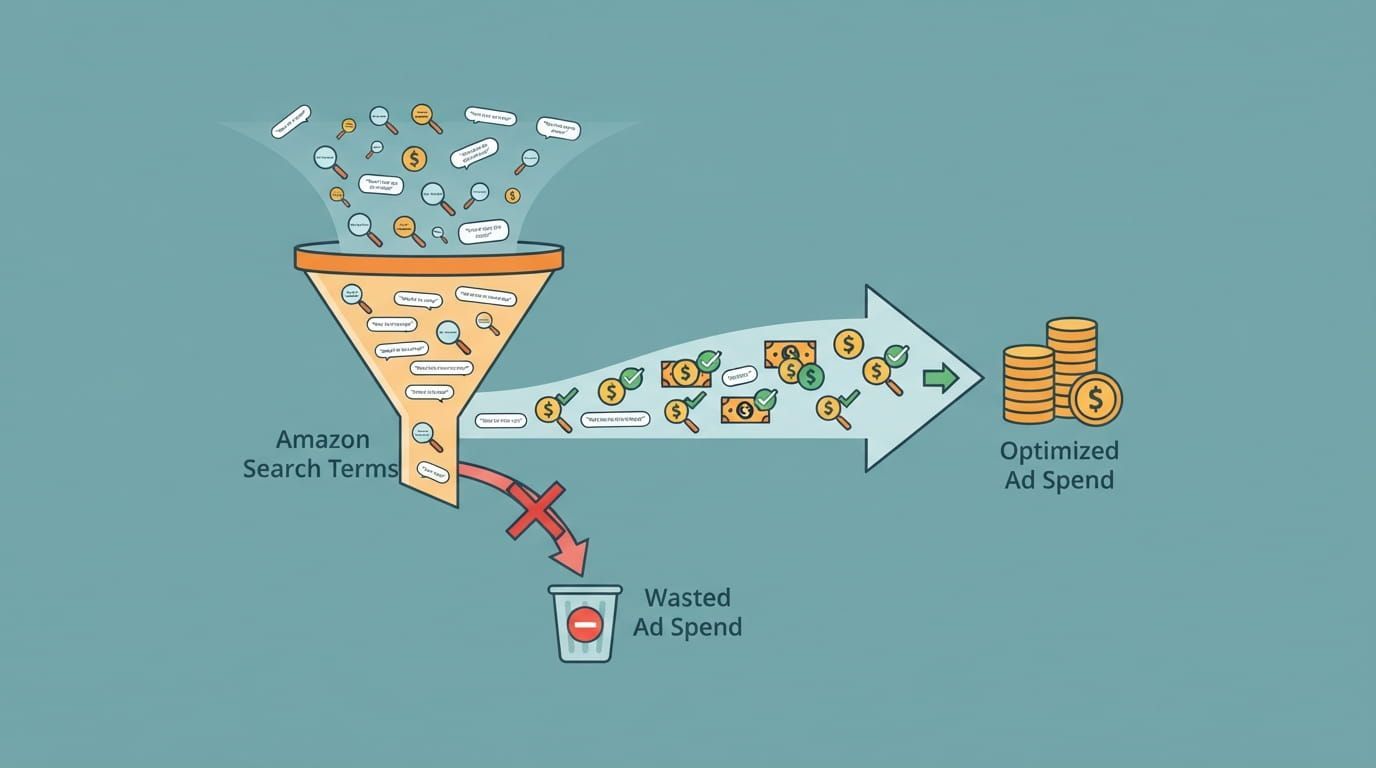
An Amazon brand management agency runs your brand's Amazon channel under one strategy: advertising, listings, creative, account health, and brand protection. Published prices for full management start around $2,000 to $2,500 a month, and percentage models charge a share of Amazon sales. Before comparing prices, confirm the agency works for a fee and never owns your inventory.
Hiring one senior marketing manager costs a median $166,790 a year in salary alone, according to the Bureau of Labor Statistics. A dedicated two-person Amazon team runs $161,000 to $268,500 a year by SupplyKick's estimate, while it puts a comparable full-service agency at $7,500 to $15,000 a month.
That's the real comparison behind hiring an Amazon brand management agency. This buyer's guide from Chief Marketplace Officer (CMO) covers what agencies actually do, the three businesses that use the label, how pricing works with published examples, agency vs in-house costs, two case studies, and the red flags to check before you sign. It's written for established brands with a working Amazon channel that need one team accountable for all of it.
What does an Amazon brand management agency do?
An Amazon brand management agency manages the whole Amazon channel for a brand: advertising, listings and search visibility, creative, account health, brand protection, and reporting. The difference from hiring specialists one by one is accountability. One team owns the result, so PPC, listings, and creative work from the same strategy instead of competing reports.
| Area | What the agency handles | Go deeper |
|---|---|---|
| Advertising | Sponsored Products, Brands, and Display; bids, structure, budgets | PPC management |
| Listings and search | Titles, bullets, backend keywords, A+ Content | Listing optimization |
| Account health | Suppressed listings, stranded inventory, policy compliance | Account management |
| Brand protection | Buy Box monitoring, unauthorized sellers, counterfeits | Brand protection |
| Operations and reporting | Restock planning, competitor monitoring, monthly reporting | Full-service management |
Three different businesses call themselves "brand management"
The label covers three business models, and they treat your brand very differently. Ask which one you're talking to before you discuss price.
| Model | How it makes money | Who controls your listings and pricing | Best for |
|---|---|---|---|
| Fee-for-service agency | Retainer, percentage, or both | You do; the agency works inside your accounts | Brands that want to keep control and margin |
| Reseller or distributor | Buys your inventory and resells it on Amazon | The reseller | Brands that want a wholesale sale, not a channel |
| Aggregator | Buys your whole brand | The buyer | Owners looking to exit |
The rest of this guide covers the first model, the one most brands mean when they search for an agency.
How much does Amazon brand management cost?
Amazon agencies price in four ways: a flat monthly retainer, a percentage of Amazon revenue, a percentage of ad spend, or a hybrid of a base fee plus a percentage. The model matters as much as the number, because each one rewards the agency for something different.
| Pricing model | How the fee moves | What to watch |
|---|---|---|
| Flat retainer | Fixed each month | Scope can drift if deliverables aren't written down |
| Percentage of revenue | Rises and falls with sales | Pays on sales you already had unless there's a baseline |
| Percentage of ad spend | Rises with ad budget | The agency earns more when you spend more, profitable or not |
| Hybrid | Base fee plus a percentage | Check exactly what the percentage applies to |
Most agencies don't publish prices, but some do. Here's what two published rate cards cost at four sales levels, checked November 4, 2026.
| Monthly Amazon sales | Marknology (from) | Amplifyr | 2-person in-house team |
|---|---|---|---|
| $25,000 | $2,750 | $2,500 (Growth tier) | $13,400 to $22,375 |
| $50,000 | $3,500 | $5,000 | $13,400 to $22,375 |
| $100,000 | $5,000 | $7,000 | $13,400 to $22,375 |
| $250,000 | $9,500 | $14,500 | $13,400 to $22,375 |
Marknology charges from $2,000 a month plus 3% of that month's Amazon sales in any month that reaches $10,000, with a 90-day minimum and then month to month. Amplifyr charges 10% of revenue under $50K (minimum $2,500), 7% from $50K (minimum $5,000), and 5% on revenue above $100K, month to month. The in-house figure is SupplyKick's estimate for an account manager plus a PPC specialist, with tools and creative.
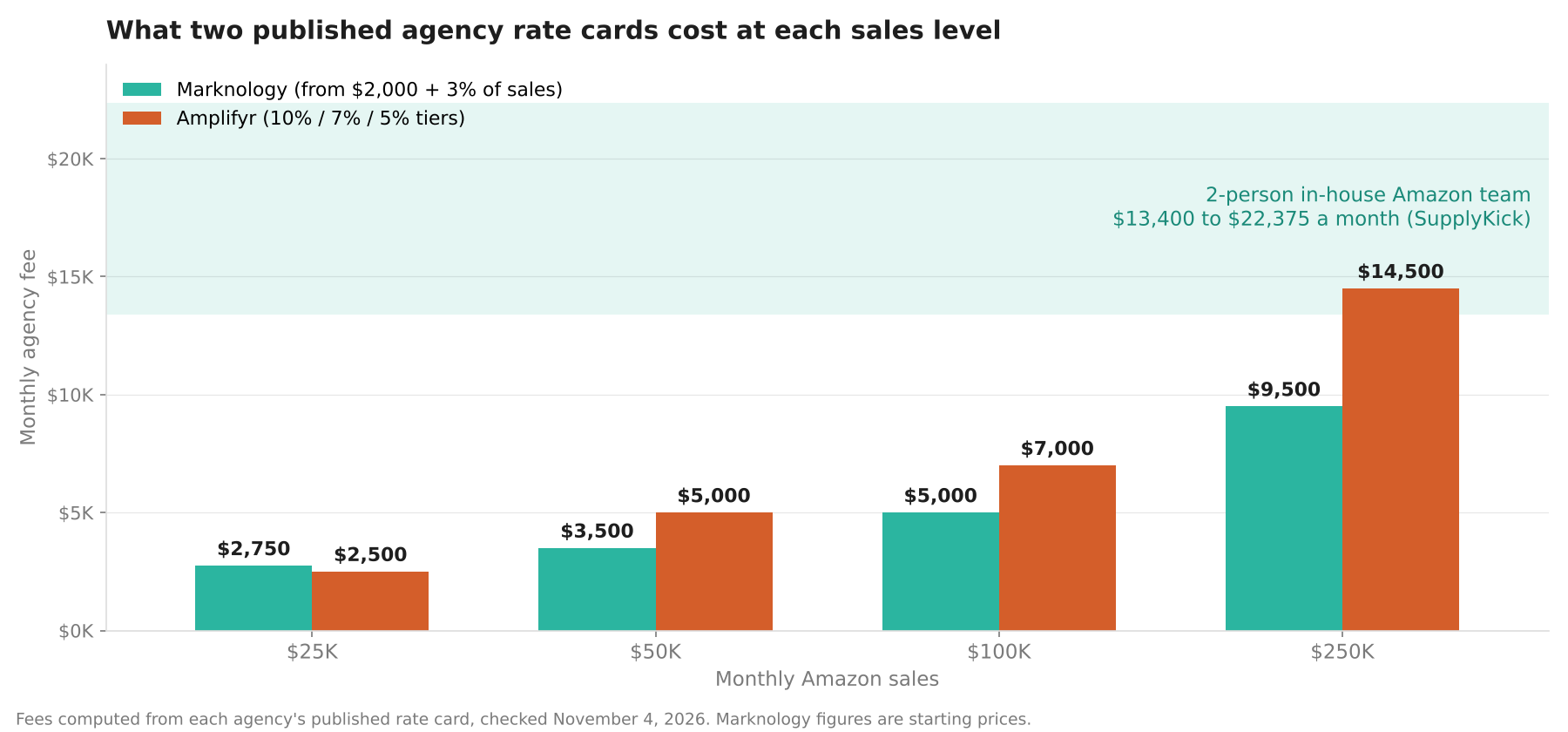 Figure 1: Published agency fees by monthly sales, against the cost of a two-person
in-house team.
Two patterns stand out. Flat-plus-percentage pricing grows more slowly as sales rise, and even at $250,000 a month, both published rate cards stay below or inside the in-house range. CMO works month to month with no long-term contracts and scopes pricing after an account audit.
Agency vs in-house: what each really costs
An in-house team gives you dedicated people. An agency gives you a team of specialists for a monthly fee. By SupplyKick's estimate, a two-person internal Amazon team costs $13,400 to $22,375 a month. The BLS median for a senior marketing manager alone is about $13,900 a month before benefits, payroll tax, and tools.
| In-house team | Agency | |
|---|---|---|
| Monthly cost | $13,400 to $22,375 for two people (SupplyKick) | $2,500 to $14,500 in the published examples above |
| Skill coverage | Two people's strengths | PPC, listings, creative, and operations specialists |
| Ramp time | Hiring plus onboarding | Starts from an audit, inside your existing accounts |
| If it isn't working | Performance management or rehiring | Change agencies; month-to-month terms make this easier |
In-house wins when you need people full time inside the business, or your catalog is large enough to support a team. Many established brands run a hybrid: an in-house lead who owns strategy, plus an agency that executes. CMO's account management is set up to work alongside an internal team, with brand owners keeping full visibility and access to their accounts.
Case study: one team instead of three vendors
A consumer goods brand with 24 ASINs across three categories split its Amazon work across three vendors: PPC internally, listings with a freelancer, and A+ Content with a design agency. Each reported its own metrics, nobody owned the account, and total sales had been flat for seven months.
CMO's audit found three root causes: campaign structure generating impressions in irrelevant categories, listings that didn't answer the top three objections in reviews, and A+ Content repeating the bullets. CMO rebuilt the campaigns, rewrote the top six listings around buyer objections, and rebuilt A+ Content for the top three ASINs.
| Metric | Before | After |
|---|---|---|
| ACoS | 38% | 21% within 60 days |
| Conversion rate, primary ASIN | 8.4% | 13.1% within 45 days of new listings |
| Total account revenue | Flat for seven months | Up 44% over the following 90 days, without more ad spend |
Source: CMO full-service management. More results are on our case studies page.
Channel control: the part most agencies skip
Channel control means deciding who sells your products on Amazon and at what price. Unauthorized resellers can take the Buy Box, undercut your pricing, and ship stock you can't vouch for, and no amount of ad or listing work fixes that. Ask every agency how it finds unauthorized sellers and traces where their inventory comes from.
This is William Fikhman's specialty. Before founding CMO, he built a brand protection agency, and CMO's brand protection work shows the result. In one case, Buy Box ownership had fallen to 52% on a brand's primary ASIN and 38% on the second.
| Metric | Before | After |
|---|---|---|
| Unauthorized sellers | 9 | 1 within 45 days |
| Buy Box ownership, primary ASIN | 52% | 94% |
| Buy Box ownership, second ASIN | 38% | 89% |
Source: CMO brand protection. For the tactics, see our guides to unauthorized resellers, Amazon's MAP pricing policy, and Project Zero.
Red flags when hiring an Amazon agency
One impressive case study can make a whole agency look strong. Psychologists call this the halo effect, and it's why the checks below matter more than the pitch deck.
- They want your main login or to own your accounts. You own your Seller Central and ad accounts. An agency should work through user permissions you can revoke.
- Long lock-in with no performance exit. If the work is good, the agency doesn't need to make leaving hard.
- A percentage of total revenue with no baseline. You end up paying for organic sales you already had.
- A percentage of ad spend with no profit guardrail. The fee rises as spend rises, whether or not that spend is profitable.
- Guaranteed rankings or badges. Amazon decides rankings and badges. No agency can promise them.
- Review "programs" outside Amazon Vine. Amazon's community guidelines prohibit incentivized reviews unless they run through the Vine program, and the account at risk is yours.
- Reports you can't check. Every number an agency shows you should match what you see in Seller Central and in Amazon Ads, now Amazon Ads Agent.
Questions to ask before you sign
| Ask this | A good answer sounds like |
|---|---|
| Who works on my account day to day? | Named people, their roles, and how often you'll talk |
| What exactly does the fee cover? | A written scope, with what costs extra spelled out |
| How do you measure success? | Revenue and margin, not just ACoS or ad sales |
| How does your team work in Amazon Ads Agent? | Who runs campaigns there, and how changes are logged and reported to you |
| How do you handle unauthorized sellers? | A monitoring cadence, an enforcement process, and a plan to trace the source |
| What happens if I leave? | Notice period stated, and everything stays in your accounts |
Talk to a fractional Amazon team
CMO is a fractional Amazon executive team: senior operators who run advertising, listings, account health, and brand protection under one strategy, month to month. See who we are and what our full-service management includes.
Hiring an Amazon Brand Management Agency: Straight Answers
What does an Amazon brand manager do?
An Amazon brand manager owns a brand's results on Amazon: advertising strategy, listing quality, pricing and inventory decisions, and brand protection. In an agency, that role coordinates the specialists. In-house, it's often one person juggling all of it.
How much does Amazon brand management cost?
Published rate cards start around $2,000 to $2,500 a month for full management. At $100,000 a month in sales, the two published examples in this guide come to $5,000 and $7,000 a month.
Is an agency cheaper than hiring in-house?
At most sales levels, yes. SupplyKick puts a two-person Amazon team at $13,400 to $22,375 a month, while both published rate cards above stay below that until well past $100,000 a month in sales.
Is there a minimum revenue to work with an agency?
It depends on the agency. Some set minimum fees, such as Amplifyr's $2,500 monthly minimum. CMO has no minimum revenue threshold and works with brands at different stages of growth.
What's the biggest red flag when hiring an Amazon agency?
An agency that wants to own your accounts or your inventory. A fee-for-service agency works inside accounts you own, and you can remove its access at any time.