How to Manage Customer Engagement on Amazon Messaging, Feedback and Review Tools (MYCE Is Gone)
Amazon's Manage Your Customer Engagement (MYCE) tool is gone; campaigns stopped in February 2024 and no native brand-to-customer email tool replaced it. Engagement is now split across narrower tools: Buyer-Seller Messaging for order communication, Request a Review and Vine for reviews, seller feedback tools for feedback issues, and Brand Tailored Promotions, Posts, and Subscribe & Save for retention.
Last verified September 2026. Several of these tools changed in 2026, including Brand Customer Reviews and Buyer-Seller Messaging. Amazon updates them often, so confirm current details in Seller Central before acting.
You are probably here for one of two reasons: you went looking for MYCE and found it missing, or you want any legitimate way to bring existing customers back. Both lead to the same place. Engagement on Amazon was never one channel, and the jobs MYCE seemed to do are now split across separate features with separate rules, several of which changed in 2026. This is a current map of what exists today, organized by the job you are trying to get done.
What Happened to Manage Your Customer Engagement?
MYCE was a free Brand Registry tool, launched in 2021, that let brands email their Amazon storefront followers and past customers through Amazon, without ever seeing customer addresses. It was used mostly for announcement-style campaigns: launches, promotions, brand updates. Then Amazon shut it down.
Per Amazon's own Seller Central announcement, MYCE stopped sending campaigns on February 16, 2024, while sellers could access historical campaign metrics through April 30, 2024. Unlike much of what circulates about this, Amazon gave a stated reason: it said the tool "did not consistently deliver the quality or value we aim to provide" to sellers and customers. Amazon's team has separately said there are no plans to relaunch or replace it.
One correction worth making plainly, because a lot of guides get it wrong: MYCE was not rebranded as Brand Tailored Promotions. Amazon pointed sellers toward Brand Tailored Promotions and Brand Customer Reviews as tools that can help, but those are a discount tool and a review-response tool, and as covered below, the latter's proactive capability was itself scaled back in 2026. MYCE was an email tool. There is currently no native Amazon way to send a brand announcement email to your customer base, so a brand that used MYCE for launch announcements has genuinely lost that specific capability, not had it replaced.
How Do I Manage Customer Engagement on Amazon?
Because "engagement" is not one tool, the useful way to think about it is by job. Here is the whole stack, mapped to what each part does:
| The job | The tools that do it | Eligibility |
|---|---|---|
| Answer a customer | Buyer-Seller Messaging | Seller messaging access |
| Ask for a review | Request a Review; Vine | Vine has extra requirements |
| Address negative feedback | Seller feedback tools; review reporting | Depends on tool |
| Drive repeat purchase | Brand Tailored Promotions; Posts; Subscribe & Save | Varies by tool |
| Hear what is going wrong | Voice of the Customer; NCX rate | Seller Central |
The eligibility column matters, because it determines what you can act on today. If you are not brand-registered, Buyer-Seller Messaging and Request a Review are your levers right now, and Brand Registry unlocks most of the rest. The sections below take each job in turn.
Messaging: Talking to a Customer About Their Order
Buyer-Seller Messaging is where you handle order-related questions, and it is open to all Professional sellers.
How Do I Respond to Customer Messages on Amazon?
Messages live in the Buyer-Seller Messaging inbox in Seller Central, and you reply there or through the Amazon Seller app, which is the practical weekend cover for a small team. Amazon expects sellers to respond to buyer messages within 24 hours, and that response time feeds the Contact Response Time metric.
The content rules are strict and are a common, avoidable suspension route. Buyer-Seller Messaging should be used for order completion and customer-service communication, not marketing or promotions, and Amazon scans messages automatically. One 2026 change worth knowing: Amazon has removed the seller's ability to manually add [Important] to a subject line to override a buyer's opt-out preference. For critical order-related communication, use Amazon's approved message reasons and templates, which determine when a message can still reach an opted-out buyer. The operational safeguard: any template needs a compliance review before it goes into rotation, because a promotional line copied across thousands of service messages is a scaled violation, not a one-off.
Messaging is also where Amazon scores your response performance and where the account-health consequences live. For the full metric definitions and related account-health context, see our guide to Amazon Business customer service; this page is about the tool and its content rules.
Reviews: Asking for Them Legitimately
There are exactly two compliant ways to ask, and both are narrow on purpose.
Request a Review
Request a Review is available to all Professional sellers, on the Order Details page of each order. It sends an Amazon-templated, non-customizable message that asks for both a product review and seller feedback in a single action, once per order, within a set window of 5 to 30 days after delivery.
The operational value comes from consistency. Because Amazon limits the request to one standardized message per eligible order, sellers should establish a repeatable workflow for checking eligible orders rather than relying on ad-hoc manual use across a busy catalog.
Amazon Vine
Vine is for new products with little or no review history, and it requires Brand Registry plus an FBA offer with fewer than 30 existing reviews. Amazon currently charges $0 for 1 to 2 units, $75 for 3 to 10, and $200 for 11 to 30 units per parent product, and you provide the free units, up to 30 per ASIN. Amazon says the enrollment fee is charged 30 days after enrollment and after the first Vine review is published; if no Vine review is received within 90 days, the fee is not charged. Verify current terms before enrolling, since Amazon adjusts these.
One honest framing: Vine reviewers are candid. A product with real weaknesses will get told so, publicly, by reviewers under no obligation to be kind. Vine is a way to earn early, credible reviews, not a way to manufacture praise.
What You May Not Do
State this plainly, because it is the single most common way good brands damage their own accounts. Incentivized reviews, review gating (funneling happy customers to reviews and unhappy ones elsewhere), asking specifically for positive reviews, and pressuring a customer to change or remove feedback are all policy violations. These are not survivable grey areas. The compliant path is Request a Review and Vine, run honestly, and nothing else.
Feedback and Reviews: Fixing What Has Gone Wrong
Two systems get conflated here constantly. Seller feedback is about your performance as a seller; product reviews are about the product. They run under different rules. Seller feedback that concerns fulfillment or delivery on an FBA order can often be struck, because Amazon controlled that delivery; product reviews are governed separately and are not removable simply for being negative.
Brand Customer Reviews changed in 2026. Amazon removed the ability for sellers to initiate contact with buyers who leave critical 1 to 3-star reviews through the Customer Review template, to align with its communication policies. Sellers can still respond when a customer contacts them first through Messages, but the proactive outreach channel for critical reviews is gone. So the practical workflow for a negative product review is now: identify recurring issues, report a review only when it violates Amazon's community guidelines, and correct the product, listing, packaging, or instruction problems driving legitimate complaints. Do not attempt to reach the reviewer through any side channel; that is a policy violation and a suspension risk.
Two more diagnoses worth naming, because they send you elsewhere. When a negative review pattern is really a listing problem, recurring complaints usually trace to a listing that oversold the product, and the fix is in the listing, covered in our Amazon listing optimization work. When it is really an unauthorized-seller problem, degraded quality from sellers who are not you, that is a brand protection issue, not a service one.
Retention: Driving Repeat Purchase
This is the job most sellers actually came looking for MYCE to do, and it is now split across three tools.
Brand Tailored Promotions
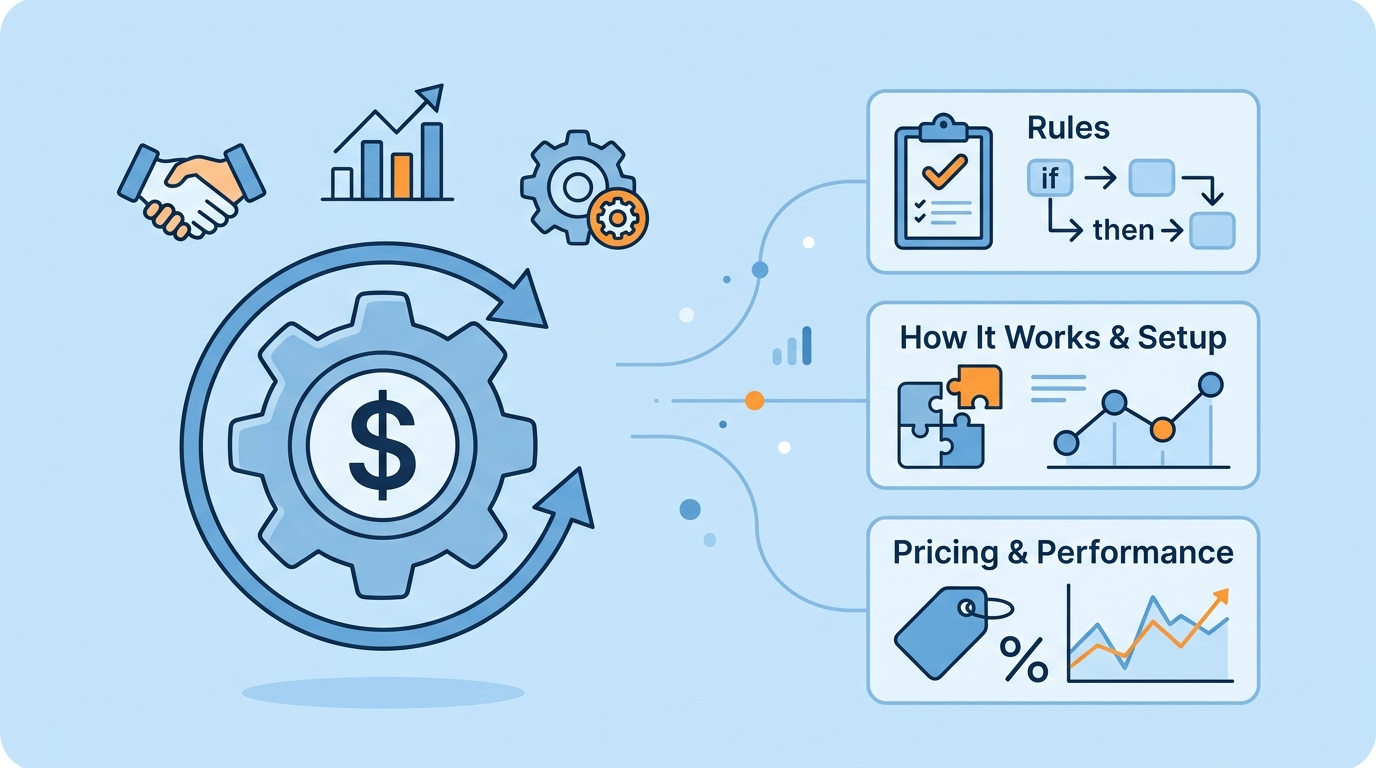
Brand Tailored Promotions (BTP) is the closest thing to a MYCE successor, with honest limits. It requires Brand Registry and lets you show a percentage discount, between 10% and 50%, to a chosen audience segment rather than every shopper. There is no Amazon fee; you fund the discount itself. As of 2026 it is organized around four goals, acquisition, retention, re-engagement, and cross-sell, with audiences surfacing under the goal you pick: brand followers, repeat customers, recent customers, high-spend, at-risk, and cart abandoners, with ASIN-level targeting available.
The current Brand Tailored Promotions setup: choose a goal, then an eligible audience. Segments under 1,000 customers show as ineligible, the accuracy point older guides quoting 100 get wrong.
One accuracy point current guides get wrong: Amazon's current public guidance states that tailored-promotion audiences must contain at least 1,000 customers, not the 100 that older guides quote.
Before you launch one, measure it properly. Record the segment's baseline orders, units, revenue, and average order value over a comparable period, then after the promotion compare those measures while accounting for seasonality, other promotions, advertising changes, and inventory. Do not treat gross promoted sales as incremental revenue; include the funded discount when judging whether it paid back. A discount handed to a customer who would have repurchased anyway is cost, not incremental profit.
The honest limit, and the paragraph that matters most: BTP is a discount tool, not a messaging tool. It cannot announce, educate, or tell a brand story. If you used MYCE to announce a launch, BTP does not give that back.
Brand Followers and Amazon Posts
Followers accumulate when shoppers click Follow on your brand, and Amazon Posts gives eligible brands another way to publish shoppable brand content inside Amazon. Where follower functionality is available, Posts can be part of a broader brand-engagement strategy. Across CMO-managed accounts, we commonly see Brand Follower audiences remain materially smaller than broader behavioral segments; for those brands, follower audiences are often more useful as a testing pool for an offer or message than as a standalone revenue channel.
Subscribe & Save
For replenishable products, Subscribe & Save is one of Amazon's clearest native retention mechanisms, because it turns eligible purchases into recurring deliveries rather than relying on a one-time promotion. It is structurally different from a discount: it changes the purchase pattern, converting a one-time buyer into a recurring one, which is worth more over time than a single discounted order. It has its own eligibility requirements, so confirm your products qualify rather than assuming every consumable is enrolled.
What No Longer Exists
Short and direct: there is currently no Amazon-native way to send a brand announcement email to your customer base. Brands can build owned audiences through compliant off-Amazon touchpoints, such as their own DTC site or independently acquired subscribers. Product inserts and warranty-registration flows require particular care: they must comply with Amazon's communication, review, and customer-data rules, and should not be used to manipulate reviews or improperly divert Amazon transactions. Insert compliance is its own topic and a real one.
Listening: Voice of the Customer
Voice of the Customer, under Performance in Seller Central, is the signal that tells you which product or listing is generating negative experiences. It reports CX Health (Excellent to Very Poor) and the negative customer experience (NCX) rate, and notably it excludes delivery issues, so it reflects the product and listing experience rather than shipping. Use a Poor or Very Poor rating as a prompt to investigate the product and the listing together. For the full metric definitions and related customer-service and account-health context, see our Amazon Business customer service guide.
What to Actually Run, by Business Model and Maturity
The stack is long, but you should not run all of it. What pays back depends less on your revenue than on your business model and maturity:
- Early-stage or operationally lean brands: get Buyer-Seller Messaging compliance and Request a Review running consistently on every eligible order before adding more channels.
- Brands with measurable repeat-purchase demand: evaluate Brand Tailored Promotions and Subscribe & Save where the catalog and margins support them.
- Brands launching new eligible ASINs: use Vine selectively to establish early review coverage.
- Larger or multi-ASIN brands: add a standing Voice of the Customer review cadence and assign clear ownership for messaging, reviews, retention promotions, and customer-experience issues.
The honest verdict most brands need to hear: they under-run the free tools before reaching for the sophisticated ones. Request a Review executed on every eligible order beats a badly targeted promotion, and messaging that stays compliant protects the account the fancier levers depend on.
Engagement Is a Stack of Narrow Tools, Not One Channel.
The brands that do this well run the free tools relentlessly and use the paid levers sparingly. Getting the compliance and the cadence right is the operational work worth handing off.
Account Health Audit: Is Your Engagement Stack Compliant and Actually Running?
Most of the risk and most of the missed upside here are operational, not strategic. We audit whether your message templates are compliant, whether Request a Review fires on every eligible order, whether your retention segments are live and margin-disciplined, and whether NCX flags are being traced back to the listings causing them.
Frequently Asked Questions About Amazon Customer Engagement
| How do I manage customer engagement on Amazon? |
| Through a stack of separate tools, each for one job: Buyer-Seller Messaging to answer customers, Request a Review and Vine to earn reviews, seller feedback tools and review reporting for feedback issues, and Brand Tailored Promotions, Amazon Posts, and Subscribe & Save to drive repeat purchase. There is no longer a single engagement tool; match the tool to the job and run the free ones consistently before adding the paid ones. |
| What is the Manage Your Customer Engagement (MYCE) tool in Seller Central? |
| MYCE was a free Brand Registry tool, launched in 2021, that let brands email their Amazon storefront followers and past customers through Amazon without seeing customer addresses. Amazon retired it in early 2024. It no longer exists in Seller Central. |
| Is MYCE still available? |
| No. Per Amazon's Seller Central announcement, MYCE stopped sending campaigns on February 16, 2024, and sellers could access historical metrics through April 30, 2024. Amazon has said there are no plans to relaunch or replace it. |
| What replaced Manage Your Customer Engagement? |
| No single tool replaced it, and it was not rebranded. Amazon initially pointed sellers toward Brand Tailored Promotions and Brand Customer Reviews after MYCE closed. But neither recreated MYCE's email capability, and Amazon later removed Brand Customer Reviews' ability to initiate contact with buyers who left 1 to 3-star reviews. Today there is still no native replacement for MYCE's brand-to-customer email. |
| Can I email my Amazon customers? |
| Not directly through a native Amazon tool since MYCE closed. You can message buyers about their orders through Buyer-Seller Messaging (no marketing content allowed), and you can reach segments with discounts through Brand Tailored Promotions. A true brand email list has to be built off-platform, through your own DTC channel and compliant, independently acquired subscribers. |
| How do I ask for a review without breaking Amazon policy? |
| Use Request a Review on the Order Details page (all Professional sellers, once per order, 5 to 30 days after delivery, Amazon-templated), and enroll new products in Vine if you have Brand Registry. Do not incentivize reviews, gate them, ask specifically for positive reviews, or pressure customers over feedback; all are policy violations. |
| Can I get a negative review removed? |
| Product reviews are not removable just for being negative; they can be reported only if they violate Amazon's community guidelines. Seller feedback is different: feedback that is purely about a delivery issue on an FBA order can often be struck. You cannot pressure a customer to change or remove either, and as of 2026 you can no longer proactively contact a buyer over a critical review. |
| Do I need Brand Registry for these tools? |
| Some, not all. Buyer-Seller Messaging and Request a Review are open to all Professional sellers. Brand Registry is required for Vine, Brand Tailored Promotions, Amazon Posts, and brand-follower features. |

William Fikhman is the founder of Chief Marketplace Officer (CMO), a fractional Amazon executive agency based in Los Angeles, California. He began selling on Amazon in 2009, scaling to $5M in year one and $20M+ within two years. Over 16 years, William has managed Amazon operations for more than 100 consumer brands, overseeing $300M+ in marketplace revenue across Seller Central and Vendor Central. He founded CMO to give consumer brands access to senior-level Amazon leadership on a fractional basis — without the cost of a full-time hire or the limitations of a traditional agency. William specializes in brand protection, distribution control, Amazon PPC strategy, and marketplace operations.
Connect on LinkedIn |
Book a consultation
Recent Posts