Amazon Business Customer Service What Amazon Measures and How to Run It Properly
On Amazon, customer service is measured, not just performed. Amazon evaluates it through several distinct performance systems: buyer-message response performance, Order Defect Rate, and Voice of the Customer. Each measures a different part of the customer experience, so strong performance in one does not guarantee strong performance in the others, and one customer problem can surface in more than one system. Running customer service properly means watching these systems together rather than reacting to whichever one last triggered a warning.
Trying to reach Amazon Business support as a buyer? If you are contacting Amazon about a business purchase, a tax exemption, or an order on your Amazon Business account, you want Amazon Business customer service, not this page. This article is for brands and sellers who want to run customer service for their own Amazon business and understand how Amazon scores it. That is everything below.
Amazon's own documentation treats customer service as a set of measured performance systems, not a satisfaction survey. That reframing is the point of this guide, because most sellers manage the part they can see, usually message response time, and get caught out by the systems they never open. Customer service on Amazon affects both account performance and offer-level customer experience, and the two are not the same thing.
Customer Service on Amazon Is a Measured Performance Function
Everywhere else, customer service is a cost center measured on how happy customers feel. On Amazon, it is measured, and it is measured in several distinct ways. Buyer-message response performance tracks how fast you reply. Order Defect Rate tracks whether orders go wrong. Voice of the Customer tracks the product and listing experience itself.
These systems are distinct, but their underlying customer events overlap, which is the part most guides get wrong. A single problem can surface in more than one place: a buyer complains, and that is a messaging-response event; the issue escalates to an A-to-Z claim, and that feeds Order Defect Rate; the same product problem repeats across orders, and that shows up in your NCX rate and CX Health. Each system tells you something different about the same underlying customer experience, so strong performance in one does not guarantee strong performance in the others.
| Performance system | What it measures | Where to find it | Amazon target |
|---|---|---|---|
| Response performance | Speed of reply to buyer messages | Buyer-Seller Messaging / Customer Service Quality Insights | Within 24 hours, incl. weekends |
| Order Defect Rate | Whether orders go wrong (negative feedback, A-to-Z, chargebacks) | Account Health Dashboard | Below 1% |
| Voice of the Customer | Product and listing experience (NCX rate, CX Health) | Performance → Voice of the Customer | Benchmarked vs similar offers |
The 24-Hour Response Standard
Amazon expects sellers to respond to Buyer-Seller Messages within 24 hours, including weekends and holidays. Build your operation around that standard rather than treating weekends as an exception. Note that a late response is measured as part of your customer-service quality signals rather than as a direct Account Health threshold, but slow or missed replies still lead to the escalations that do affect performance.
Operationally, an internal target shorter than 24 hours gives your team room to investigate and resolve issues before the Amazon response window closes; many well-run operations aim to reply well within the day. You will find your response performance in Buyer-Seller Messaging under Customer Service Quality Insights. For small teams without weekend staffing, the Amazon Seller app is the realistic stopgap, since it lets whoever is on call clear urgent messages from a phone rather than leaving them to age past the window.
Buyer-Seller Messaging Rules
Response speed only counts if the messages themselves stay compliant, and Buyer-Seller Messaging has firm rules. No unsolicited promotional or marketing content. No prohibited review solicitation, meaning you cannot ask for positive reviews or offer anything in exchange. Amazon scans messages automatically for violations. Attachments are allowed up to 10MB in formats including PDF, JPG, PNG, and DOCX.
Two rules catch sellers off guard. First, once a buyer opts out of non-critical messaging, only messages tagged as important and direct replies to their questions reach them. Second, violations here are not minor; a pattern of policy-breaking messages can escalate to account action. That is why any templated or automated message needs a compliance review before it goes into rotation. A template that quietly solicits a review across thousands of orders is a scaled violation, not a one-off.
Order Defect Rate and A-to-Z Claims
Amazon's target for Order Defect Rate, or ODR, is below 1%. It combines negative seller feedback, A-to-Z Guarantee claims, and credit card chargebacks into a single rate against your orders. ODR is an important seller-performance metric, and it is also one of the metrics Amazon considers when evaluating Featured Offer eligibility and overall seller performance, so it is worth keeping well under the target.
Here is the connection sellers miss between ODR and the response metric: a fast reply that does not actually solve the problem clears your response-time signal while still producing an A-to-Z claim. The buyer got a quick answer, but not a resolution, so they escalate, and the escalation lands on ODR. Speed without resolution does not remove the problem; it moves it from the system you were watching to the one you were not. That is exactly why these systems have to be read together.
Voice of the Customer, CX Health, and NCX
Voice of the Customer is Amazon's current dashboard for monitoring offer-level customer experience. This area is especially easy to misunderstand because Amazon's customer-experience metrics and dashboards have changed over time, so it is worth getting the current definitions right.
VoC runs on two metrics. The NCX rate, or negative customer experience rate, is the number of orders for which a customer reported a product or listing issue, divided by total orders. Amazon draws that from returns, refunds, customer service contacts, buyer-seller messaging, seller feedback, A-to-Z claims, and product reviews, and counts at most one NCX event per ASIN-order combination even if the customer took several actions. CX Health takes that NCX rate and benchmarks it against similar offers, then rates each offer on a five-point scale: Excellent, Good, Fair, Poor, or Very Poor.
Two details matter and are usually reported wrong. First, delivery problems are excluded; negative experiences stemming from delivery issues do not affect an offer's CX Health, because this measures the product and listing experience, not shipping. Second, CX Health and NCX rates do not by themselves result in account-level action, but offers with Poor or Very Poor CX Health can be at risk of closure because of negative customer experiences. You will find it under Performance, then Voice of the Customer. Treat a slide toward Poor or Very Poor on an ASIN as an early warning about the product or listing, before it turns into lost sales or a closed offer.
The FBA Illusion
Here is the belief that quietly damages more brands than any single policy: that Fulfillment by Amazon means Amazon owns your customer service. It does not. With FBA, Amazon handles fulfillment and delivery-related customer contact for eligible FBA orders, but sellers still need to monitor product, listing, feedback, return, and customer-experience signals. Fulfillment responsibility is not the same as product and listing experience responsibility.
| Area | FBA | FBM |
|---|---|---|
| Delivery-related service | Amazon handles applicable fulfillment issues | Seller handles |
| Product / listing experience | Seller remains responsible | Seller remains responsible |
| CX Health / NCX monitoring | Seller monitors | Seller monitors |
| Product reviews / seller feedback | Still affect the seller and listing | Still affect the seller and listing |
| Listing accuracy | Seller responsibility | Seller responsibility |
Serving Amazon Business (B2B) Customers
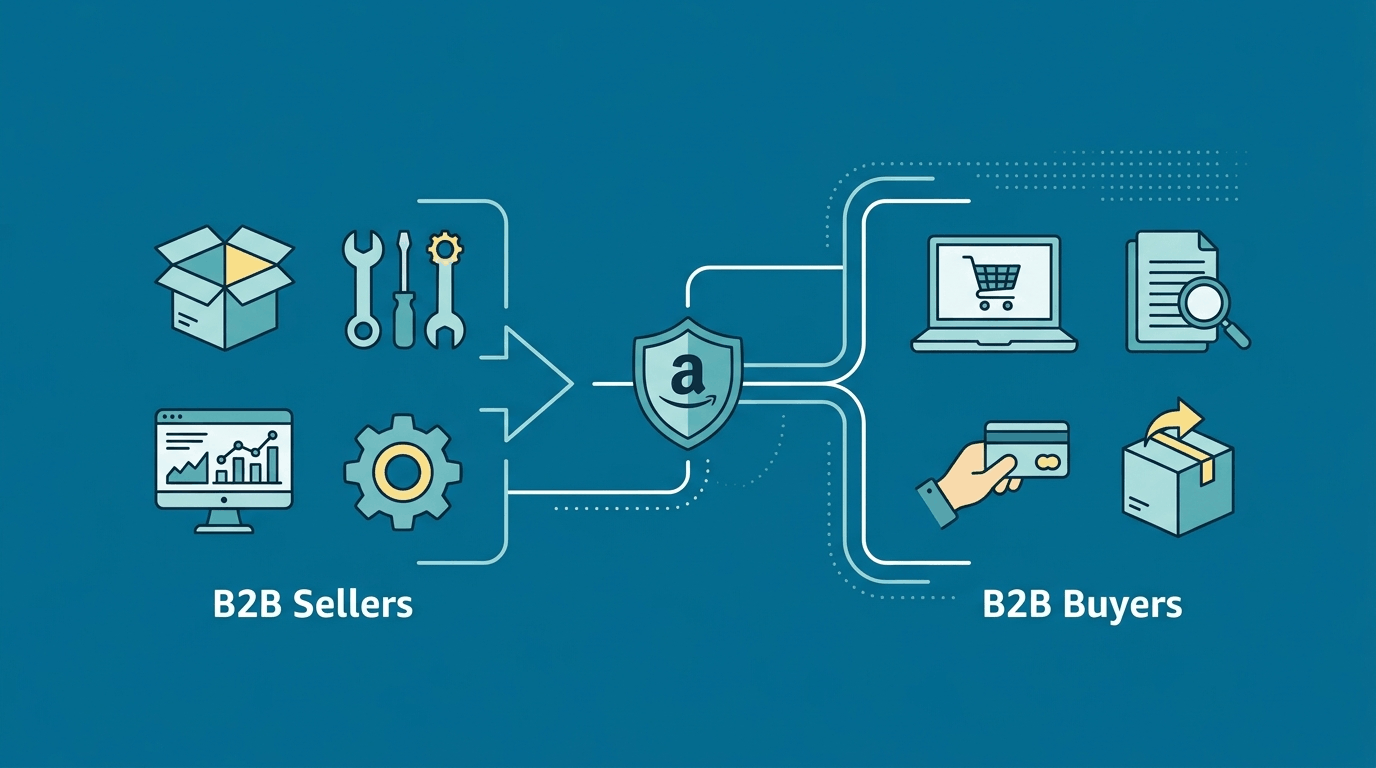
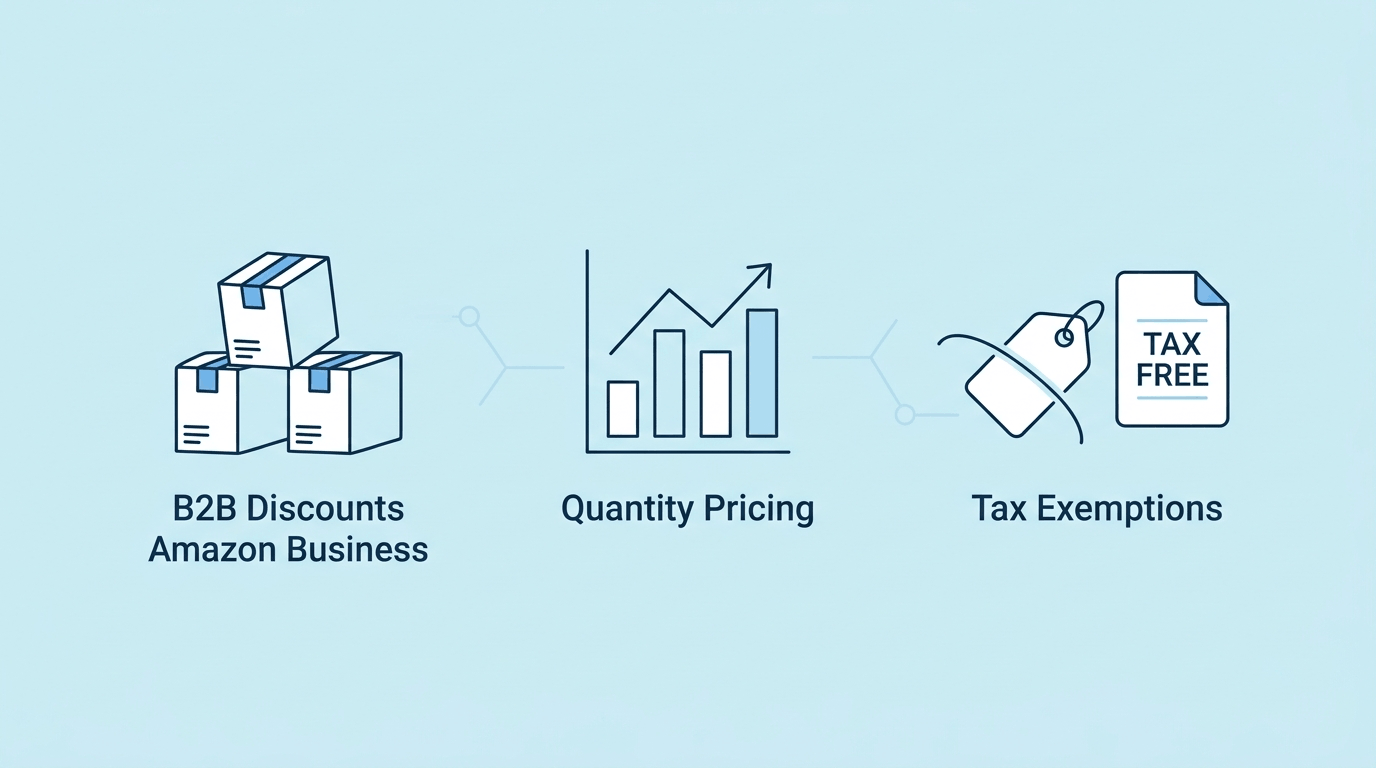
The keyword says "Amazon Business," and almost no seller-side guide addresses the B2B service layer, so here it is. Amazon Business buyers behave differently from consumers, and the differences change how you staff and respond. B2B orders often carry PO numbers, come with tax-exemption questions, and involve bulk or quantity-discount inquiries. The buyer is frequently part of a procurement chain with an approval process behind them, and reorder values run higher.
The practical effect is that response expectations are effectively tighter, because a stalled B2B order does not block one person's purchase; it blocks a workflow that other people are waiting on. Where Amazon's Invoice Defect Rate policy applies, sellers should keep the rate below the applicable threshold; for example, Amazon's policy in relevant marketplaces uses a 5% threshold, driven largely by missing or late invoices. For B2B sellers, poor service can also affect repeat purchasing and procurement relationships, making customer service a retention issue as well as a performance issue.
Feedback Removal vs Review Removal
Sellers conflate these two constantly, and they are different systems with different rules. Seller feedback is about your performance as a seller: fulfillment, delivery, service. Product reviews are about the product itself. They are governed separately, and what you can do about each differs.
| Situation | Seller feedback | Product review |
|---|---|---|
| What it is about | Your service and fulfillment | The product |
| Removable when | It violates policy, or is purely about a delivery issue on an FBA order | Only if it violates Amazon's community guidelines |
| How | Feedback Manager or a Seller Support case | Report the review for a guidelines violation |
| Can you pressure or incentivize removal/change? | No | No |
The one clean removal most sellers miss: seller feedback that is entirely about a delivery problem on an FBA order can often be struck, because Amazon controlled that delivery. What you cannot do, in either system, is pressure, manipulate, or incentivize customers to remove or change seller feedback or product reviews; that is a policy violation in its own right. Where negative feedback traces back to unauthorized sellers degrading your listing, that is a brand-protection problem, not a service one, and it is worth reading our approach to Amazon brand protection.
Building the CS Operating System
Everything above is diagnosis. This is the operation that holds at volume. A functioning Amazon CS system has coverage windows that include weekends, because the 24-hour clock does not pause on Saturday. It has a triage rule that separates pre-purchase questions, which are sales opportunities, from defect reports, which are performance risks, so the urgent ones are handled first. It runs on compliance-reviewed templates that still read like a human wrote them. It has an escalation path with named owners, so a brewing A-to-Z claim reaches someone empowered to resolve it before it posts. And critically, it includes a weekly review across your performance systems together, response performance, ODR, and Voice of the Customer, rather than reacting to whichever one last threw a warning.
Pricing, inventory, and service all feed the same account, which is why we manage them together rather than in silos, through full service management, the same logic behind our Amazon Automate Pricing approach.
When It Is Really a Listing Problem
A closing point that redirects half of what looks like a service failure. When one ASIN generates recurring NCX, the problem is rarely your customer service. It is a listing that promised something the product does not deliver: a size the images made look bigger, a compatibility detail that was missing, a feature the copy oversold. No amount of fast, friendly replies fixes a listing that sets the wrong expectation, because the negative experience happens before the customer ever contacts you. The tell is concentration: service problems scatter across your catalog, while a listing problem clusters on one ASIN. When you see NCX stacking up on a single product, fix the listing and the CS volume drops on its own, which is why we treat recurring NCX as a listing signal and route it into Amazon SEO and listing optimization.
Customer Service Is Scored, Not Just Performed.
This guide shows you the systems Amazon measures and how they connect. Running the operation so it holds through peak, with every system reviewed weekly, is the part worth handing off.
Is Your Account Health Already Amber?
If messages are slipping on weekends, if you are seeing NCX flags on products you thought were fine, or if a warning email just landed, the fix is not more hours from an overloaded inbox. We start with your Account Health Dashboard, review your performance systems together, and build a CS operation that holds through Q4.
Frequently Asked Questions About Amazon Customer Service for Sellers
| How fast do I have to respond to Amazon buyer messages? |
| Amazon expects a response within 24 hours, including weekends and holidays. Build your operation around that standard rather than treating weekends as an exception. Operationally, aiming to reply well inside the day gives your team room to investigate before the window closes. |
| Does Amazon handle customer service for FBA sellers? |
| With FBA, Amazon handles fulfillment and delivery-related customer contact for eligible orders, but you still need to monitor product, listing, feedback, return, and customer-experience signals. NCX rate, CX Health, reviews, and seller feedback still apply to your account. |
| What is the NCX rate? |
| The negative customer experience (NCX) rate is the number of orders where a customer reported a product or listing issue, divided by total orders. It draws from returns, refunds, customer service contacts, buyer-seller messaging, seller feedback, A-to-Z claims, and reviews. Delivery issues are excluded. |
| Can I ask a customer to remove negative feedback? |
| You can dispute seller feedback that violates policy or is purely about a delivery issue on an FBA order, through Feedback Manager or Seller Support. You cannot pressure, manipulate, or incentivize a customer to remove or change feedback or reviews; doing so is itself a policy violation. |
| What happens if my Order Defect Rate goes over 1%? |
| Amazon's target for ODR is below 1%. ODR is one of the performance metrics Amazon considers when evaluating Featured Offer eligibility and seller performance, so exceeding the target can affect eligibility and, if sustained, prompt a performance review. It is best addressed quickly. |
| How is customer service different for Amazon Business buyers? |
| B2B buyers bring PO numbers, tax-exemption questions, and bulk inquiries, and they sit inside procurement workflows, so a stalled order blocks a process rather than one purchase. Where it applies, watch the Invoice Defect Rate against the applicable threshold, and note that poor service can affect repeat purchasing and procurement relationships. |

William Fikhman is the founder of Chief Marketplace Officer (CMO), a fractional Amazon executive agency based in Los Angeles, California. He began selling on Amazon in 2009, scaling to $5M in year one and $20M+ within two years. Over 16 years, William has managed Amazon operations for more than 100 consumer brands, overseeing $300M+ in marketplace revenue across Seller Central and Vendor Central. He founded CMO to give consumer brands access to senior-level Amazon leadership on a fractional basis — without the cost of a full-time hire or the limitations of a traditional agency. William specializes in brand protection, distribution control, Amazon PPC strategy, and marketplace operations.
Connect on LinkedIn |
Book a consultation
Recent Posts