Quick Answer
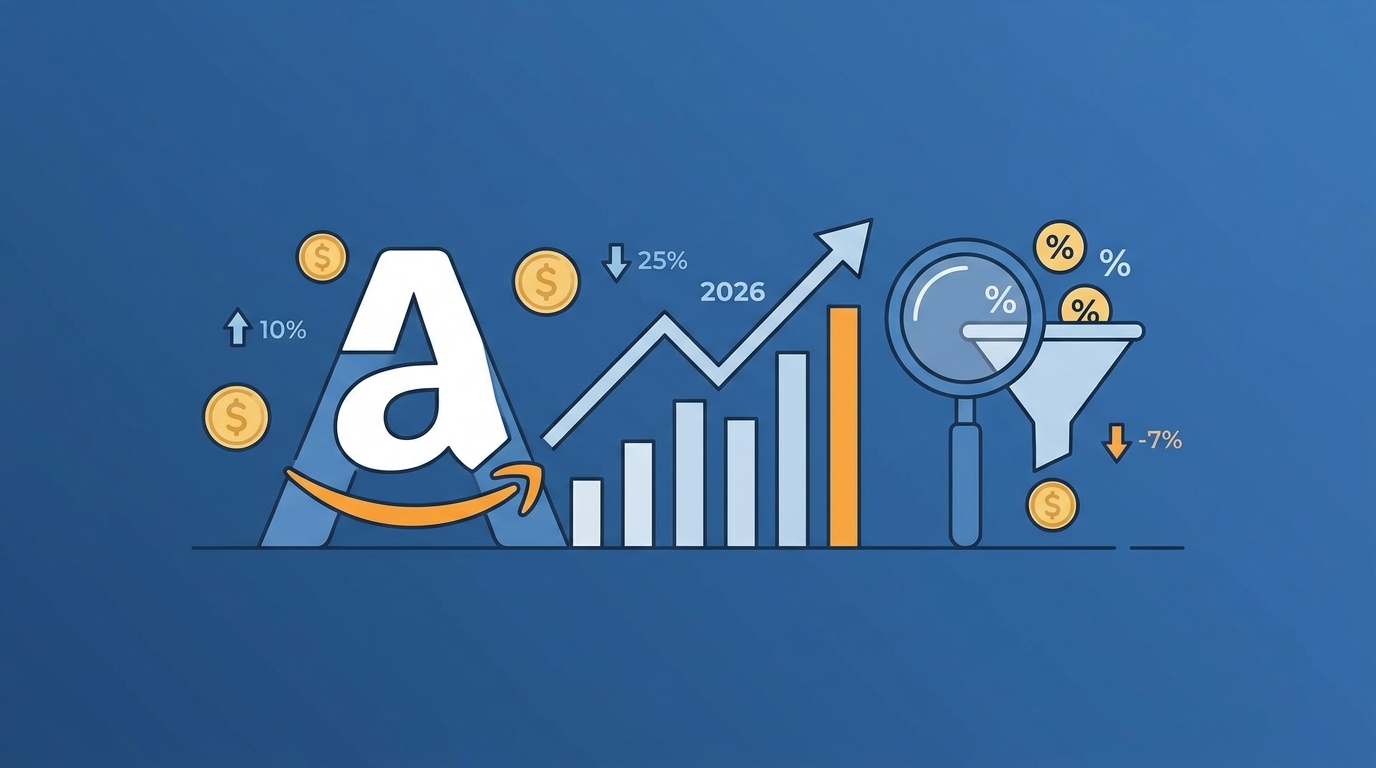
Amazon dynamic pricing means prices change automatically in response to competitor prices, demand, and sales. Amazon retail matches competitors' prices, and third-party sellers can automate their own prices with Amazon's free Automate Pricing tool or a third-party repricer. Used well, it keeps an offer competitive for the Featured Offer. Used without floors and rules, it erodes margin and reference prices.
In April 2011, biologist Michael Eisen's lab went looking for a copy of the developmental biology classic The Making of a Fly and found new copies listed on Amazon for well over a million dollars. Over the following days, one listing climbed to $23,698,655.93 plus shipping. As The Register reported, two sellers were using algorithms that set each price relative to the other's, one slightly below and one well above, and each daily update pushed both higher.
The lesson has outlasted the story. Amazon dynamic pricing is not a tactic you switch on. It is a set of rules that will execute exactly what you tell it to, including your mistakes, faster than you can notice them.
01
What Dynamic Pricing on Amazon Actually Means
Three terms get used interchangeably, but they describe different things:
- Dynamic pricing
is the broad practice of changing prices in response to market conditions.
- Repricing
is the seller-side version on Amazon: automatically adjusting your offer price against competitors or sales.
- Algorithmic pricing
is repricing driven by software logic rather than a person editing prices by hand.
Most repricing on Amazon falls into one of two models.
| Model |
How it decides |
Best suited to |
| Rule-based
|
Follows fixed rules you set, such as "match the Featured Offer" or "stay $0.50 below the lowest price" |
Sellers who want predictable, auditable price moves |
| Algorithmic
|
Weighs several signals at once and adjusts toward a goal, such as Featured Offer share or sell-through |
Resellers on shared listings with many competing offers |
Neither model is smarter by default. A rule-based setup with sensible floors usually beats an algorithmic one with no guardrails.
02
Does Amazon Use Dynamic Pricing?
Yes, on two levels. For its own retail offers, Amazon states in its explanation of its pricing approach
that it compares and matches its prices to physical and online competitors. Independent sellers set their own prices, and Amazon offers optional tools to help them stay competitive.
The second level matters more to sellers. When several offers compete on one product, Amazon evaluates all of them and highlights the offer it thinks customers would choose if they compared every offer in detail. Amazon also says it does not highlight an offer when it learns another store sells the product for less. That is why external prices feed into your Featured Offer eligibility, not just prices inside Amazon.
03
How Amazon's Pricing Signals Shape Your Repricing
Price is a major input to the Featured Offer, but not the only one. Amazon's pricing strategy guidance
advises pricing at or below the lowest price from major retailers outside Amazon, and it also weighs fast shipping, customer service metrics, and stock levels. Its Automate Pricing FAQ is direct on this point: automating your price does not guarantee you become the Featured Offer.
Academic research points the same way. In a 2016 study of Amazon Marketplace, Chen, Mislove and Wilson
identified more than 500 sellers very likely using algorithmic pricing. Those sellers won the Buy Box more often, even when they were not the lowest price. The study predates Amazon's current systems, so treat it as evidence of a principle, not a current benchmark. The principle still holds: repricing works best when the rest of the offer is already competitive.
04
The 2026 Shift: Shoppers Can See More of Your Price Moves
Dynamic pricing used to be mostly invisible to shoppers. In the U.S. store, that is changing.
In its 2026 reference pricing announcement
on Amazon.com Seller Central, Amazon describes a Price history graph on product detail pages that shows the lowest Featured Offer price each day, and says reference pricing would be aligned with it. Availability can vary by product and marketplace. Alexa for Shopping (formerly Rufus), available to U.S. customers, can also track prices and buy items when they hit a shopper's target price. (Verified October 2026.)
Where shoppers can see that history, aggressive repricing carries two new risks:
- Visible dips train shoppers to wait.
If your repricer drops the price for a few hours every week, shoppers with price tracking can simply wait for the dip.
- Frequent lows can lower your reference price.
From May 18, 2026, if more than half the days in a product's 90-day price history sit below the non-promotional median, Amazon calculates Typical Price using all sales. A repricer that spends most days at its floor can shrink your strikethrough savings.
We cover how reference prices and strikethroughs work in our guide to Amazon pricing psychology.
05
Amazon Repricing Strategy by Seller Type
The right repricing strategy depends on who else sells your product.
| Seller situation |
Repricing approach |
Main risk |
| Brand owner, sole seller
|
Minimal repricing; use sales-based rules and scheduled promotions |
Unnecessary price swings that weaken reference prices |
| Brand owner, with resellers on the listing
|
Compete for the Featured Offer within approved channel policies and margin floors |
Matching unauthorized sellers into a race to the bottom |
| Reseller on shared listings
|
Competitive rules against the Featured Offer, with firm minimums |
Repricer wars that erode margin for everyone |
| New product launch
|
Hold a stable price; use coupons or deals for visibility |
Training early buyers to expect the lowest price |
If resellers are driving your price down, repricing treats the symptom. Our guide to Amazon price wars
covers how to hold price and fix the supply source behind it.
06
Choosing Amazon Dynamic Pricing Tools
Start with Amazon's free option before paying for anything. According to Amazon's Automate Pricing page, the tool supports:
- Competitive rules
that compare against the Featured Offer, the lowest price, or the lowest external price
- Sales-based rules
that change price based on sales volume over a set period
- Business price rules
that update B2B prices and quantity discounts from your standard price
You set a minimum price and an optional maximum price. Amazon says existing rules usually process price updates in less than 15 minutes, and that Automate Pricing changes do not count toward the daily price update allotment. We break down setup and rule choice in our Amazon Automate Pricing tool guide. If you sell to business buyers, see how business price rules interact with Amazon Business pricing.
Third-party repricers make sense when you need logic Automate Pricing does not offer, such as competitor-specific rules, time-of-day schedules, or multichannel pricing. Judge any tool on four questions: Can it enforce a hard minimum? Can it exclude specific competitors? Can it log every price change with a reason? Can it pause on a stockout or pricing error?
To measure results, Amazon recommends cross-referencing the Automate Pricing 30-day history with your Business Reports to track Featured Offer percentage and sales.
07
Guardrails: Floors, Fair Pricing, and Margin
Every repricing rule needs three limits.
A margin floor.
Your minimum price should come from real unit economics, including fees, fulfillment, and advertising cost. Run each ASIN through the CMO Amazon profitability calculator
before setting it.
A ceiling that respects Fair Pricing.
Amazon's Fair Pricing Policy warns against prices significantly higher than recent prices for the same product. A repricer chasing demand upward without a maximum can trip it.
Channel and contract limits.
For brand owners, pricing automation should account for approved channel policies, product positioning, and applicable contractual obligations. MAP policies generally concern advertised prices and do not automatically establish lawful minimum resale prices. Have legal counsel review relevant restrictions.
Running all of this across a catalog is ongoing work, not a one-time setup. It is part of what our Amazon full-service management
team handles alongside advertising, listings, and inventory.
Is Your Repricer Making Money or Just Moving Prices?
If your prices change daily but Featured Offer share and margin do not improve, the rules need a review, not more automation. Book a free 30-minute Amazon strategy call to discuss your repricing rules, margins, and Featured Offer performance, or see our Amazon full-service management
service.
08
Amazon Dynamic Pricing Questions Sellers Ask Before Automating
| What is dynamic pricing on Amazon?
|
| It is the practice of changing prices automatically in response to competitor prices, demand, or sales. On Amazon, sellers usually do it through repricing rules, either in Amazon's free Automate Pricing tool or a third-party repricer. |
| Does Amazon use dynamic pricing?
|
| Yes. Amazon says it compares and matches its retail prices to competitors. Independent sellers set their own prices, and Amazon gives them optional tools to automate them. |
| How does Amazon's pricing algorithm work?
|
| Amazon has not published a formula. It says it highlights the offer customers would likely choose after comparing all offers, weighing price alongside shipping speed, stock, and seller performance, and it checks prices outside Amazon. |
| What is the best dynamic repricing tool for Amazon?
|
| There is no single best tool. Start with Automate Pricing, which is free, and move to a third-party repricer only when you need rules it cannot handle. Choose based on floor enforcement, competitor exclusions, and change logs, not marketing claims. |