Amazon SEO and PPC: Why Paid and Organic Strategies Must Work Together
A consumer brand can spend $50,000 per month on Amazon advertising and still fail to build sustainable marketplace growth. Ad-attributed sales rise while campaigns are active. When the budget is reduced, revenue falls immediately. Organic visibility has not improved, and the listing still depends on paid placement to reach shoppers.
The opposite problem happens when brands optimize titles, bullet points, backend terms, and images without using paid search to validate demand. The listing may contain relevant keywords, but the brand does not know which terms attract qualified shoppers or produce purchases.
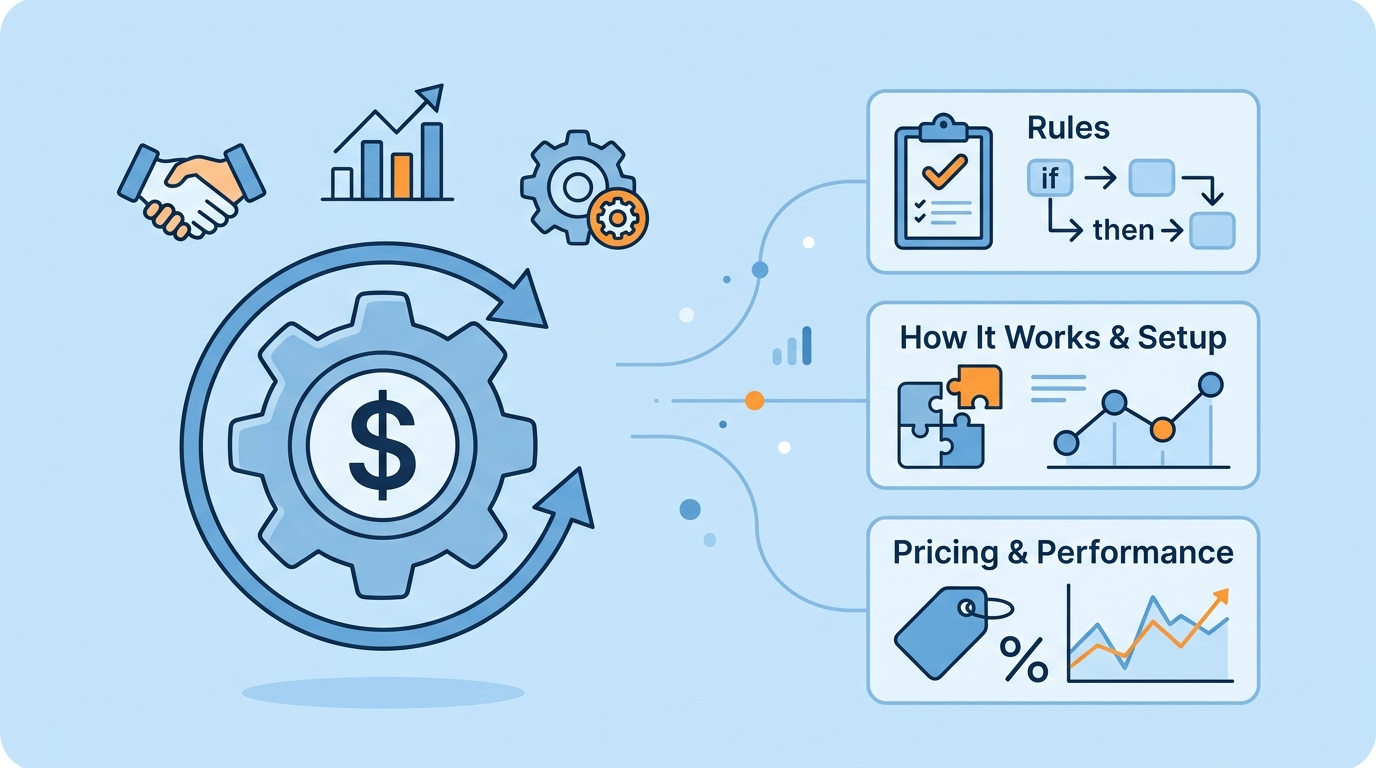
That is the operational gap an integrated Amazon SEO and PPC strategy is designed to close. PPC creates visibility and search intelligence. SEO turns that intelligence into stronger relevance, conversion, and organic reach. This guide explains how the two support each other, what disconnected strategies cost, and what the Paid-Organic Growth Loop requires in practice.
Why Amazon Brands Separate SEO and PPC
Different people, agencies, or internal departments often handle Amazon SEO and PPC separately. The PPC team manages bids, budgets, targeting, and ACoS. The content team manages titles, bullet points, backend search terms, images, and A+ Content. Each team reports its own results, but neither owns the complete path from search impression to purchase.
That separation creates predictable problems:
| Strategic Gap | What Actually Happens |
|---|---|
| Different keyword lists | PPC targets terms the listing does not clearly support |
| No shared conversion data | Copywriters optimize around search volume instead of purchase behavior |
| PPC-only reporting | Ad-attributed sales rise while total account efficiency remains flat |
| SEO-only reporting | Rankings improve without proving the keywords generate profitable sales |
| Delayed listing updates | Valuable search-term data stays inside the advertising console |
| Weak creative coordination | Ads generate clicks, but the detail page fails to complete the sale |
Sponsored Products places individual listings in shopping results and on product pages. When shoppers click, they go to the advertised detail page, so the listing must convert the traffic advertising generates. A gap between ad intent and listing relevance is not a bidding problem.
What Amazon SEO and PPC Actually Control
Amazon SEO and PPC influence different parts of the customer journey. Understanding which lever controls which outcome is the prerequisite for integrating them.
| Function | Amazon SEO | Amazon PPC |
|---|---|---|
| Keyword relevance | Titles, bullets, attributes, descriptions, and backend terms | Keyword, product, and automatic targeting |
| Search visibility | Earned organic placement | Paid shopping-result and product-page placement |
| Traffic timing | Develops as relevance and performance strengthen | Begins when campaigns become eligible and active |
| Search intelligence | Brand Analytics and organic-query performance | Search-term, targeting, placement, and product reports |
| Conversion | Listing copy, images, reviews, price, and A+ Content | Delivers shoppers to the detail page |
| Budget control | No direct bid requirement | Daily budgets, bids, and placement adjustments |
| Testing | Listing experiments and organic performance analysis | Controlled targeting, match types, and campaign tests |
Amazon recommends detailed product pages with accurate titles, useful bullet points, strong images, relevant search terms, descriptions, and A+ Content because listing quality influences the likelihood of an advertising click becoming a sale.
The Financial Cost of Disconnected SEO and PPC
The cost of separating paid and organic strategies appears in advertising reports first. It eventually affects total sales, profitability, and the brand's dependence on paid traffic.
When Paid Traffic Reaches a Weak Listing
Consider an ASIN receiving 10,000 ad clicks at an average cost of $1.50. Advertising spend: $15,000. Product price: $35. Conversion rate: 8%. Ad-attributed orders: 800. Ad-attributed sales: $28,000. ACoS: approximately 53.6%.
At the same traffic and spend, an 11% conversion rate would generate 1,100 orders and $38,500 in ad-attributed sales. ACoS would fall to approximately 39%. The example demonstrates why conversion must be evaluated before the brand assumes bids or keywords are the only advertising problem.
When Organic Optimization Uses the Wrong Keywords
A brand builds its title around a broad, high-volume category phrase. PPC data later shows that shoppers convert more consistently through a specific material, size, ingredient, or compatibility term. The broad phrase generates visibility but weak purchase intent. The high-intent phrase remains buried in secondary content. PPC repeatedly pays to reach shoppers the listing should address organically. Search volume identifies opportunity. Conversion data determines whether that opportunity is commercially relevant.
How Amazon SEO and PPC Support Growth Together
Advertising should produce more than ad-attributed revenue. It should reveal how shoppers search, which value propositions matter, and where the listing loses conversion. SEO should produce more than keyword indexation. It should improve the product page receiving both paid and organic traffic.
| Paid Search Insight | Organic or Listing Action |
|---|---|
| A search term generates consistent sales | Prioritize it in the appropriate listing fields |
| A term receives clicks but few orders | Review search intent, price, reviews, images, and product fit |
| A long-tail phrase converts efficiently | Strengthen its visibility in copy and attributes |
| A competitor ASIN converts as a product target | Clarify relevant differentiation in image stack and A+ Content |
| Branded advertising dominates sales | Evaluate organic branded visibility and paid incrementality |
| One ASIN converts better than similar products | Compare its offer, reviews, content, pricing, and variation structure |
| Irrelevant searches consume spend | Add negatives and remove misleading listing language |
Amazon's Sponsored Products search-term report shows the customer searches that resulted in at least one advertising click. Brand Analytics adds an organic and catalog-level view through its Search Query Performance dashboard, which reports query-level impressions, clicks, cart additions, purchases, and the brand's share of performance compared with the overall query. The two data sources should be evaluated together.
Why Search-Term Data Changes the Optimization Equation
Traditional keyword research estimates how shoppers may search. Amazon's own reports show how shoppers interacted with the product after searching. That distinction matters operationally.
A keyword can have high search volume and weak relevance for a particular ASIN. Another term may attract shoppers who already understand the product type, ingredient, size, application, or compatibility requirement.
| Data Source | Question It Answers |
|---|---|
| PPC search-term report | Which customer searches generated advertising clicks and sales? |
| Targeting report | Which keywords, match types, and product targets performed? |
| Placement report | Where did the ads perform most efficiently? |
| Search Query Performance | Which queries produced impressions, clicks, carts, and purchases for the brand? |
| Search Catalog Performance | How did shoppers move through the brand's search funnel? |
| Listing conversion data | Did the product page convert the traffic it received? |
The mistake is copying every converting search term into the listing. The correct process is to determine why the term converted, whether it accurately describes the product, where it belongs, and whether it improves customer understanding. Relevant terms may belong in the title, bullets, attributes, description, backend fields, image copy, or A+ Content.
Amazon also allows eligible brands to test listing elements through Manage Your Experiments, including titles, images, bullet points, descriptions, and A+ Content, giving the brand empirical data to guide optimization decisions rather than relying on assumptions.
The Paid-Organic Growth Loop
Many brands treat SEO as a one-time listing project and PPC as ongoing campaign maintenance. An integrated Amazon SEO and PPC strategy operates as a continuous four-stage cycle of discovery, validation, conversion, and compounding.
Stage 1: Discover
Use automatic campaigns, broad targeting, Brand Analytics, competitor research, and search-term reports to identify how shoppers search. This is the data collection layer. Structured Amazon PPC management
maintains this discovery function as a standing weekly process rather than a launch-time exercise.
Stage 2: Validate
Move promising searches into controlled campaigns. Evaluate relevance, clicks, conversion, sales, cost, and product-level profitability. Validation separates high-volume searches from commercially relevant ones.
Stage 3: Convert
Apply validated customer language to listing copy, attributes, images, A+ Content, and Storefront navigation where appropriate. This is where Amazon listing optimization
absorbs the intelligence PPC has generated. A title updated with a validated high-intent term will outperform a title built on estimated search volume because it reflects actual buyer behavior.
Stage 4: Compound
Reallocate spend toward productive targets, monitor organic query performance, and reduce reliance on traffic that does not create incremental value. As listings strengthen, organic visibility improves. As TACoS declines, the brand's profitability per revenue dollar improves. The loop restarts as new campaigns discover the next layer of demand.
A brand that collects PPC data without improving its listing keeps paying to relearn the same information. A brand that updates its listing without validating shopper behavior relies on assumptions. The Paid-Organic Growth Loop closes the feedback between advertising performance and listing optimization.
When Keywords Are Not the Problem
Pricing, inventory availability, review quality, variation structure, Buy Box eligibility, category placement, and catalog errors can all affect performance. Amazon's advertising guidance specifically emphasizes inventory, featured-offer status, price, reviews, and detail-page quality when selecting products to advertise. Structured Amazon SEO services identify when the problem has moved beyond keywords and route it to the appropriate advertising, creative, catalog, or account management function.
Signs Your Paid and Organic Strategies Are Disconnected
These signals appear before the full impact becomes visible in profitability reporting.
The account is buying more visibility without developing unpaid demand or search presence. PPC may be scaling, but the broader marketplace position is not compounding.
The targeting may be relevant enough to earn the click, but the listing, offer, reviews, pricing, or product fit is not completing the purchase. This is a listing problem presenting as an advertising problem.
Advertising is validating one set of customer searches while listing content emphasizes another. Valuable shopper language never reaches the detail page.
The product has become dependent on paid placement. Before cutting spend further, the brand should evaluate organic query share, branded demand, listing conversion, and competitive visibility.
The brand may be earning visibility for terms that do not reflect meaningful purchase intent. Ranking alone is not proof of commercial value.
Amazon SEO and PPC Integration in Practice
PPC tests category, feature, and long-tail searches while the product has limited organic visibility. Converting terms inform future title, bullet, image, and backend search-term decisions.
A mature ASIN receives strong advertising traffic but declining sales. The team compares search-term intent with the title, main image, pricing, reviews, and detail-page content before increasing bids.
A long-tail query converts consistently through advertising but has limited organic visibility. The term is incorporated naturally into the listing, then monitored through Search Query Performance and conversion data.
A product already holds strong organic visibility for its branded searches. The team evaluates whether every branded ad placement creates incremental value or whether part of the budget should move toward category discovery.
PPC Producing Clicks but the Listing Isn't Converting?
If advertising is generating traffic but organic sales disappear whenever spend slows, the account has a coordination problem, not a traffic problem. Chief Marketplace Officer connects Amazon PPC management, SEO services, listing optimization, and creative services through one operating strategy.
What Amazon Brands Ask About Amazon SEO and PPC Integration
| What is Amazon SEO? |
| The process of improving product relevance, discoverability, and conversion through titles, bullets, descriptions, backend terms, product attributes, images, and A+ Content. Amazon's own guidance recommends using relevant customer search terms and Brand Analytics data to improve product visibility in organic search results. |
| Does Amazon PPC improve organic ranking? |
| Amazon does not publish a formula stating that advertising directly guarantees higher organic rankings. PPC creates paid visibility, sales opportunities, and query-level performance data. Those outcomes may support broader product momentum, but campaigns should not be presented as a guaranteed organic-ranking shortcut. |
| Should a brand optimize the listing before launching PPC? |
| The listing should have a strong baseline before directing substantial traffic to it. Product information, title, images, bullets, offer, price, and inventory should be accurate and conversion-ready. PPC can then validate demand and reveal the next optimization opportunities rather than spending against a listing that cannot convert the traffic it receives. |
| Can Amazon SEO reduce ACoS? |
| SEO and listing improvements can create better conditions for advertising efficiency by strengthening relevance and conversion rate. ACoS is also affected by bids, cost per click, competition, price, placement, targeting, reviews, and margins, so no listing change guarantees a specific ACoS outcome. |
| How often should Amazon SEO and PPC be reviewed together? |
| Campaign performance should be monitored regularly, while broader keyword, listing, organic visibility, and profitability reviews should occur through a consistent monthly operating process. Product launches, seasonal periods, pricing changes, inventory constraints, and sudden conversion declines may require more frequent coordination between advertising and listing functions. |

William Fikhman is the founder of Chief Marketplace Officer (CMO), a fractional Amazon executive agency based in Los Angeles, California. He began selling on Amazon in 2009, scaling to $5M in year one and $20M+ within two years. Over 16 years, William has managed Amazon operations for more than 100 consumer brands, overseeing $300M+ in marketplace revenue across Seller Central and Vendor Central. He founded CMO to give consumer brands access to senior-level Amazon leadership on a fractional basis — without the cost of a full-time hire or the limitations of a traditional agency. William specializes in brand protection, distribution control, Amazon PPC strategy, and marketplace operations.
Connect on LinkedIn |
Book a consultation
Recent Posts