Unauthorized Amazon Sellers: Trace Inventory and Stop Leaks
Understanding Amazon’s Transparency Program
Amazon’s Transparency Program is a serialization service designed to prevent counterfeit products from reaching customers. By assigning unique Transparency codes to each unit of a product, Amazon can verify its authenticity before fulfillment. However, it's important to note that while Transparency effectively deters counterfeiters, it doesn't prevent unauthorized resellers from acquiring genuine inventory and undercutting your brand. This is why brands must combine transparency with other brand protection strategies.
Who Are Unauthorized Sellers on Amazon?
An unauthorized seller is any individual or business that lists and sells your products on Amazon without your permission. These sellers typically acquire inventory through various means, such as:
- Gray Market Sellers – They purchase products through legitimate channels and resell them without authorization.
- Counterfeiters – They produce and sell fake versions of branded products, often infringing on trademarks and intellectual property rights.
- Unauthorized Retailers – They obtain products through unauthorized means and list them on Amazon without your permission.
How Unauthorized Sellers Harm Your Brand
Unauthorized sellers can have several negative impacts on your business, including:
- Loss of Customer Trust – Customers may unknowingly purchase from unauthorized sellers, leading to issues like poor quality or counterfeit products.
- Price Erosion – Unauthorized sellers often engage in price wars, undercutting your brand and reducing your profit margins.
- Damage to Brand Reputation – Inferior or counterfeit products can lead to negative reviews and a tarnished brand image.
- Loss of Control – When multiple unauthorized sellers list your products, it becomes difficult to maintain a consistent brand experience.
How to Use Amazon’s Transparency Program to Protect Your Brand
The Transparency Program is one of Amazon’s most effective solutions for combating counterfeiters and protecting brand integrity. Here’s how you can leverage it to its full potential:
1. Enroll in the Transparency Program
To enroll in the Transparency Program, your brand must meet the following criteria:
- You must be the brand owner.
- Your products must have a scannable barcode (UPC, EAN, or GTIN).
- You must apply unique Transparency codes to each unit.
Once enrolled, every unit you sell will have a Transparency code that Amazon scans before fulfillment. This ensures only authentic products reach customers and prevents counterfeit listings.
2. Educate Customers on Transparency Codes
Amazon provides a Transparency app that allows customers to scan and verify product authenticity before purchasing. Encourage your customers to use this tool to ensure they receive genuine products directly from your brand.
3. Monitor Your Transparency Dashboard
The Transparency Program provides a dashboard where brands can track products and identify potential unauthorized sellers attempting to distribute counterfeit or unverified products.
Additional Strategies to Stop Unauthorized Sellers on Amazon
While the Transparency Program is effective against counterfeiters, it does not automatically remove unauthorized resellers. Here are additional steps to fortify your brand protection efforts:
1. Enroll in Amazon Brand Registry
If you haven’t already, enroll in Amazon Brand Registry. This program gives you access to:
- Advanced brand protection tools.
- The ability to report unauthorized sellers.
- Greater control over your product listings and content.
2. Implement Distribution Agreements
To prevent unauthorized sellers from obtaining your products, establish legally binding distribution agreements with authorized resellers. These agreements should clearly define:
- Where and how your products can be sold.
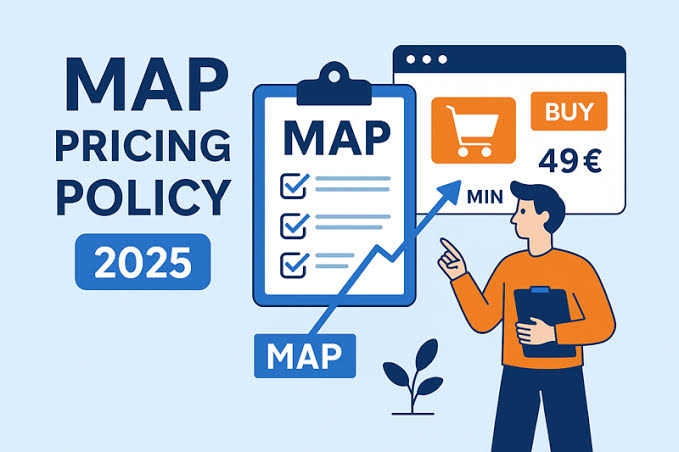
- Minimum advertised pricing (MAP) policies.
- Consequences for violations.
If a distributor breaks these terms, you have legal grounds to take action against them.
3. Apply for Amazon’s Brand Gating
Brand Gating is an Amazon program that restricts unauthorized sellers from listing your products. To qualify, you must:
- Prove brand ownership.
- Demonstrate the risk of counterfeit or unauthorized sales.
- Submit trademark documentation.
Once approved, only authorized sellers will be able to list your products on Amazon.
4. Monitor Your Listings Regularly
Unauthorized sellers can appear at any time, so consistent monitoring is crucial. Consider using Amazon monitoring tools like:
- Helium 10
- BrandShield
- SellerApp
These tools track your listings, detect unauthorized sellers, and alert you to potential violations.
5. Engage Unauthorized Sellers Directly
If you identify an unauthorized seller, reach out to them via Amazon’s messaging system or the contact information on their storefront. Send them a Cease and Desist Letter stating:
- They are not authorized to sell your products.
- They must remove their listings immediately.
- Legal action may follow if they do not comply.
If they refuse to stop selling, escalate the matter by reporting them to Amazon and seeking legal counsel.
6. Report Unauthorized Sellers to Amazon
Amazon allows brand owners to report unauthorized sellers through:
- Amazon’s Report a Violation Tool (RAV)
- Brand Registry Support
- Transparency Program Dashboard
Provide Amazon with evidence of unauthorized sales, including order invoices, product discrepancies, and intellectual property rights documentation.
7. Take Legal Action When Necessary
If an unauthorized seller continues to violate your brand’s rights, you may need to pursue legal action. Options include:
- Filing for trademark infringement claims under the Lanham Act (U.S.).
- Issuing DMCA takedown notices for copyrighted content violations.
- Suing for breach of contract if the seller obtained inventory through unauthorized distribution channels.
Consult an intellectual property attorney to determine the best course of action.
8. Educate Your Customers
Customers often don’t know they’re purchasing from unauthorized sellers. Protect your brand by:
- Adding Authorized Seller Warnings to your product descriptions.
- Encouraging customers to verify Transparency codes before purchase.
- Directing them to buy from your Amazon Storefront or official website.
Final Thoughts
Protecting your brand on Amazon isn’t just about stopping counterfeiters—it’s about maintaining control, preserving customer trust, and safeguarding your long-term success. By leveraging the Transparency Program, strengthening your brand protection strategy, and proactively managing your distribution, you can eliminate unauthorized sellers and ensure your products are sold on your terms.
Unauthorized Amazon sellers usually offer genuine product that left your own distribution chain through a distributor, retail partner, liquidator, arbitrage buyer, or export channel. Tracing that inventory means combining documented test buys, lot or serial codes, packaging details, and shipment records, then rating each lead by the strength of its evidence. The goal is to identify the supply route and close it with record and contract controls, without accusing a partner on a clue that only narrows the field.
Consider a hypothetical brand that finds an unauthorized offer on its best-selling ASIN. The seller eventually disappears, but three weeks later another storefront offers the same product. A test purchase shows a lot code matching the earlier inventory. The brand now has a lead, not proof of a particular distributor's involvement. It still needs to trace where that batch went.
This guide covers that tracing work: what each clue can and cannot establish, how to record an investigation so it holds up, and which controls make the next leak easier to find. For the broader picture, see our guides to finding unauthorized resellers, removing unauthorized sellers through Amazon, and identifying gray market sellers.
Why the Investigation Starts With Inventory, Not the Seller
Amazon generally does not remove a seller for being unauthorized. In a Seller Forums reply to a brand owner, an Amazon moderator stated that Amazon respects exclusive distribution agreements, but that violations of those agreements are not intellectual property infringement and that enforcement is a matter between the manufacturer and its retailers.
Under the first-sale doctrine, US trademark law generally permits the resale of genuine products that were lawfully placed into commerce. A reseller's lack of brand authorization does not automatically establish trademark infringement, even when an upstream distributor violated a contractual restriction. However, materially different products, interference with legitimate quality-control procedures, and other specific circumstances can create exceptions. Brands should have qualified counsel assess the evidence before pursuing a trademark claim.
That leaves the supply chain as the practical place to act. It also means reporting genuine resale as infringement works against you. Amazon's Project Zero eligibility criteria include at least a 90% acceptance rate on trademark reports filed through Report a Violation in the last six months, and enrolled brands must keep a 99% accuracy rate on self-service removals (verified October 2026). Inaccurate infringement reports can affect a brand's complaint acceptance rate and eligibility for Project Zero. Amazon considers the reporting history alongside additional eligibility criteria, so brands should submit complaints only when the evidence supports an actual IP violation.
Five Supply Routes and the Evidence Each One Leaves
Each supply route leaves a different evidence pattern. Knowing the pattern tells you which records to pull first.
| Supply Route | Typical Evidence Pattern | Records to Check First |
|---|---|---|
| Authorized distributor selling on | Steady supply in current packaging, consistent pricing, professional storefront | Orders versus sell-through, shipment dates, lot allocation by account |
| Retail partner clearance | Bursts of stock after a season, reset, or store closing | Promotional terms, markdown and return agreements |
| Liquidation and returns | Mixed condition, odd quantities, older packaging | Liquidation sales, return dispositions, destruction certificates |
| Retail arbitrage | Small quantities spread across many sellers, retail-level pricing | Retail promotions and price drops by channel |
| Diverted export inventory | Regional packaging, foreign-language labels, different compliance marks | Export shipments by region, regional price lists |
Behind most of these routes sits what economists call a principal-agent problem. Your distributor is supposed to act in your interest, but its own incentive is to move volume. When a sale to a marketplace reseller helps a partner hit its numbers, the agreement is working against the incentive.
How to Trace Unauthorized Inventory Step by Step
Treat every finding as an investigative indicator until independent evidence supports it. The biggest risk in this work is confirmation bias: settling early on a suspect and then reading each new clue as proof.
- Make a documented test purchase. Buy as a customer would. Keep the order ID, purchase date, fulfillment method, shipping label, packaging, and any paperwork in the box.
- Record the physical identifiers. Note lot numbers, batch codes, date codes, and serial or Transparency codes, then compare them against production and shipment records.
- Read the packaging. Regional labeling, language, compliance marks, and barcode variants can narrow the likely route.
- Note condition and quantity. Steady stock in current packaging is a signal worth investigating, not proof of a supply relationship. Small quantities in mixed condition point toward arbitrage or liquidation.
- Ask the seller for sourcing documentation. Sellers may decline, and a refusal on its own does not establish misconduct.
- Repeat the sample over time. One unit is one data point. Repeat purchases across several weeks either strengthen the hypothesis or break it.
What Lot Codes, Serial Numbers, and Transparency Can and Cannot Prove
| Identifier | What It Can Show | What It Cannot Prove on Its Own |
|---|---|---|
| Lot or batch code | Which production run the unit came from | Which of several accounts that received the batch supplied the seller |
| Serial number | A single unit's identity, if your records map serials to shipments | Who bought the unit after it left the first recipient |
| Transparency code | That the unit is authentic and enrolled | That the resale breached any contract |
| Regional packaging | The market the unit was produced or labeled for | Which exporter or importer moved it |
Amazon Transparency assigns a unique code to each enrolled unit. Those codes support tracing only when your own records connect code ranges to specific shipments. A genuine unit that left your channel still carries a valid code. Our Transparency guide covers enrollment.
The Unauthorized Inventory Investigation Worksheet
A consistent record turns scattered test buys into evidence you can act on. Log every case in the same format.
| Investigation Field | What the Brand Records |
|---|---|
| ASIN and product | Identifier and affected SKU |
| Seller details | Seller name, seller ID, storefront URL |
| Test-buy record | Order ID, purchase date, fulfillment method |
| Physical identifiers | Lot number, batch code, serial number |
| Potential distribution source | Distributor or shipment candidate |
| Supporting evidence | Shipping dates, quantities, documentation |
| Confidence level | Unconfirmed, partially supported, or substantiated |
| Next action | Additional test purchase, distributor inquiry, or legal review |
Define the confidence levels before you need them. Unconfirmed means one indicator, such as a single matching lot code. Partially supported means two or more independent indicators point to the same source, such as matching lot codes plus shipment timing. Substantiated means documentation directly links the inventory to an account, such as downstream invoices. Only substantiated cases should move to legal review.
Illustrative Example: Narrowing a Shared Batch
A brand finds three unauthorized offers on one ASIN. Test buys show identical lot codes, so the units likely came from one production batch, which shipped to two authorized distributors. The worksheet rates the case as unconfirmed. The brand then compares shipment quantities, delivery dates, regional packaging, and the distributors' reported sell-through. One distributor's orders exceeded its sell-through during the period, which moves the case to partially supported. This is a hypothetical scenario, not a client case.
Approaching a Distributor Without a False Accusation
A partially supported case justifies a conversation, not an accusation. Start with the rights your agreement already gives you, such as a request for downstream invoices or customer lists for the relevant lot. Ask about the shipment, not about the seller's guilt. Partners who are not involved usually answer quickly, and their records can clear them or point to the account that resold the stock.
Bring counsel in before any letter that alleges a breach, threatens termination, or names a third party. A formal notice based on a shared lot code alone can damage a relationship you need and create legal exposure.
Contract and Record Controls That Make the Next Leak Traceable
Most investigations stall because the records were never built for tracing. Fix that at the source.
- Map identifiers to shipments. Record which lot, serial, or Transparency code ranges went to each account and on which date.
- Write explicit marketplace terms. Require written consent for marketplace resale, prohibit sales to buyers who resell on marketplaces, and require partners to pass these terms down the chain.
- Secure downstream visibility. A contractual right to request invoices or customer lists is worth more than a penalty clause, because it lets you establish where a unit went before anyone is accused.
- Control overstock and returns. Specify what happens to discontinued lines and returned goods, including certified destruction where appropriate.
- Watch the incentives. Volume tiers that reward buying rather than selling, regional price gaps, and dormant accounts on the authorized list all create room for diversion.
A minimum advertised price policy governs advertised pricing, not the price a reseller actually charges, and Amazon does not enforce it for you. Our Amazon MAP pricing policy guide covers what it can and cannot do. Have counsel draft and review any agreement, MAP policy, or termination. This article is operational guidance, not legal advice.
When the Problem Is Not Supply: Amazon Reporting Paths
Some offers need a different route. Keep the distinction between legal claims and Amazon reporting categories clear, because they do not map one to one.
- Counterfeits: Report a Violation, or Project Zero if you qualify, after a confirming test buy. Our listing hijacking guide covers diagnosis.
- Materially different product: Expired, damaged, or altered goods sold as new may support a legal claim, but that does not mean every case qualifies for an Amazon IP complaint. Have counsel review the evidence before choosing a path.
- Listing content changes: Request a catalog correction through Brand Registry.
- Price pressure: Hold your floors rather than matching. See our price wars guide and dynamic pricing guide.
A Monitoring Cadence That Catches Leaks Early
Monthly. Review the offer list on your priority ASINs and log every new seller with the date, price, fulfillment method, and storefront link.
Quarterly. Make documented test buys from the sellers holding the most inventory, update the worksheet, and audit your authorized account list against actual ordering.
Annually. Review distribution agreements and record-keeping against what the year's cases showed, and update terms at renewal.
Measure whether your investigation is working. Record the baseline number of unfamiliar sellers across priority ASINs, the number of new offers appearing each month, and the share of investigated purchases linked to a documented supply route. Track which cases are unresolved and whether affected ASINs continue experiencing unauthorized offers after corrective action. Compare the same ASIN group before and after changes rather than claiming success from one seller disappearing.
Repeated unauthorized offers warrant a review of the underlying inventory supply. Removing an individual storefront does not necessarily prevent other sellers from obtaining the same products. Tracking the seller activity and tracing inventory can help brands determine whether the problem is recurring diversion or separate, unrelated resale.
Same Product, New Seller, Every Few Weeks?
CMO reviews the offers on your ASINs, separates likely counterfeits from genuine resale, and builds the evidence trail that shows where the inventory came from. Then we help you decide whether the next step belongs with Amazon, a distribution partner, or legal counsel. See our Amazon brand protection services and account management services.
Unauthorized Amazon Sellers: Tracing Questions Brands Ask Before Contacting a Distributor
| How many test buys do we need before acting? |
| There is no fixed number. What matters is independent corroboration: repeated purchases over several weeks that point to the same source, plus at least one record outside the unit itself, such as shipment timing. A single purchase can open a case but rarely closes one. |
| Our lot code matches a batch that went to only one distributor. Is that enough? |
| It is a strong lead, but the distributor may have sold legitimately to a retailer who then resold the stock. Ask the distributor for downstream records for that lot before treating the case as substantiated. |
| Will Transparency codes show which distributor leaked a unit? |
| Only if your operations team recorded which code ranges shipped to which account. Transparency confirms authenticity. The mapping from code to customer is your responsibility. |
| What should we start recording now if we have no tracing data at all? |
| Begin with lot or code ranges by account and ship date, plus a monthly log of new sellers on priority ASINs. Even three months of consistent records makes the next investigation far faster than reconstructing history. |
| The seller refused to share sourcing documents. Does that prove anything? |
| No. Many resellers decline as a matter of policy. Note the refusal in the worksheet and continue with test buys and shipment records. |

William Fikhman is the founder of Chief Marketplace Officer (CMO), a fractional Amazon executive agency based in Los Angeles, California. He began selling on Amazon in 2009, scaling to $5M in year one and $20M+ within two years. Over 16 years, William has managed Amazon operations for more than 100 consumer brands, overseeing $300M+ in marketplace revenue across Seller Central and Vendor Central. He founded CMO to give consumer brands access to senior-level Amazon leadership on a fractional basis — without the cost of a full-time hire or the limitations of a traditional agency. William specializes in brand protection, distribution control, Amazon PPC strategy, and marketplace operations.
Connect on LinkedIn
|
Book a consultation
Recent Posts