Amazon Advertising Attribution Why Your Ad Reports Mislead You and How to Read Them Correctly
Amazon advertising attribution decides which sales get credited to which ads. The window differs by ad type and account (Sponsored Products is 7 days for sellers, 14 for vendors), Amazon changed view attribution on January 1, 2026, and conversions arrive with a lag. Read it against total sales, not just attributed sales.
Verified August 2026. Amazon attribution rules change often. The windows and the January 2026 view-attribution update below were current as of August 2026; confirm against Amazon Ads documentation before acting on them.
Amazon advertising looks like the most measurable channel in marketing. Every click, impression, and conversion is tracked and reported daily. Yet that abundance of data is exactly what misleads brands, because the numbers shift, they credit differently than sellers assume, and they quietly hide waste. Brands managing their own ads routinely kill campaigns that were working, or scale ones that are cannibalizing free organic sales, all on the strength of reports they read at face value.
This guide covers Amazon's attribution windows and the important 2026 change, why ACoS moves after a few days, the organic halo effect, how last-touch reporting undervalues Sponsored Brands, and where the search term report helps uncover waste.
What Is Amazon's Attribution Window?
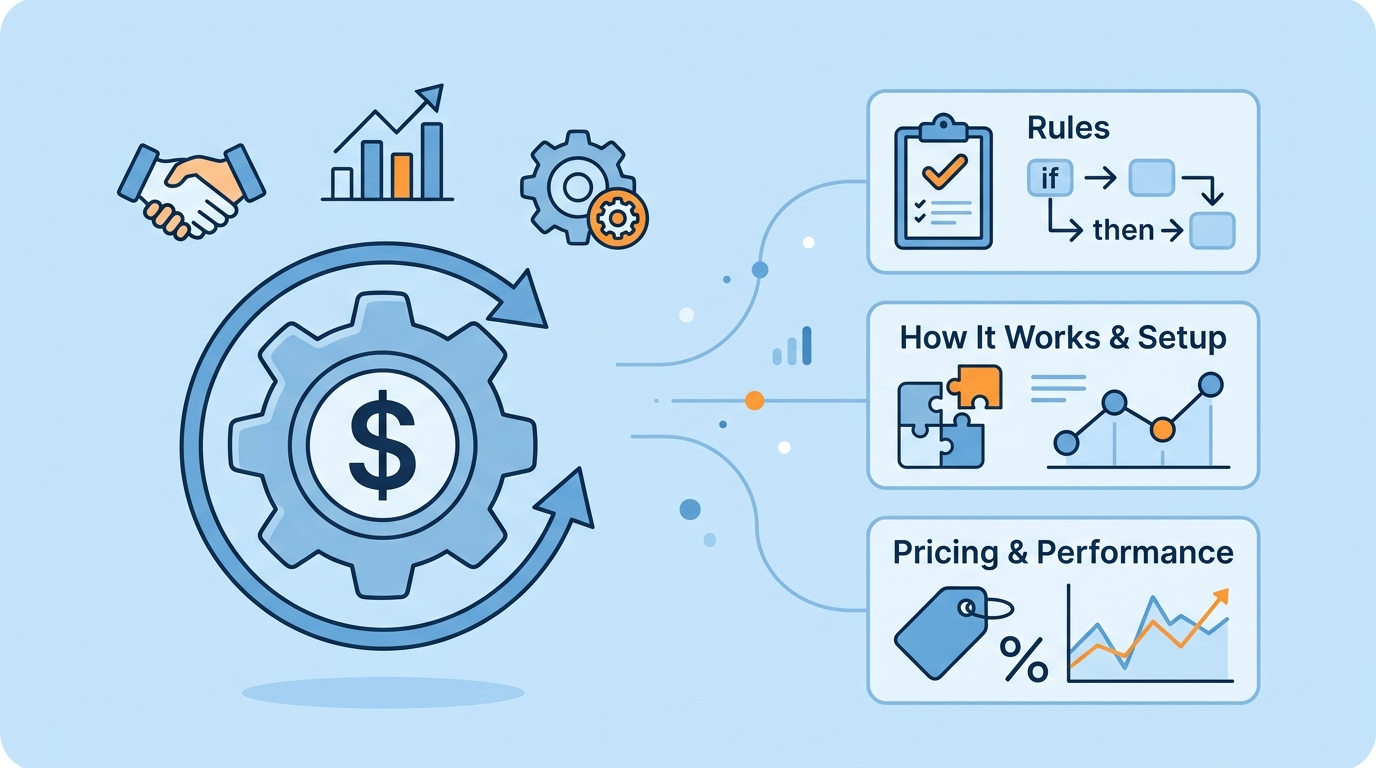
An attribution window is the period after an ad interaction during which a resulting sale still gets credited to that ad. It is not one number, and treating it as one is the first mistake. The table below summarizes the current windows; the sections that follow explain what each one means for how you read your reports.
| Ad type | Click window | View attribution | Account note |
|---|---|---|---|
| Sponsored Products | 7 days (seller) / 14 days (vendor) | None (click only) | Differs by account type |
| Sponsored Brands | 14 days | vCPM campaigns only | Same for seller and vendor |
| Sponsored Display | 14 days | vCPM campaigns only | Same for seller and vendor |
| Amazon DSP | Varies by setup | Yes | Store ads use 2026 model |
| Amazon Attribution | 14 days last-touch | N/A | Off-Amazon traffic only |
Sponsored Products: 7 Days or 14, Depending on Your Account
Sponsored Products uses a click-based window that depends on your account type. Seller Central (third-party) accounts get a 7-day window; Vendor Central (first-party) accounts get 14 days, per Amazon's sponsored ads attribution documentation. This matters more than it sounds. A seller and a vendor running the identical Sponsored Products campaign will see different attributed sales, because the seller stops counting after one week while the vendor keeps counting for two. For higher-priced products with longer purchase cycles, a meaningful share of conversions can fall outside a 7-day window entirely, making a seller's campaign look weaker than the same campaign would look for a vendor.
Sponsored Brands and Sponsored Display: 14-Day Click
Sponsored Brands and Sponsored Display both use a 14-day click window, for sellers and vendors alike. Sponsored Display and Sponsored Brands campaigns using vCPM billing can also include view-attributed conversions, crediting sales when a shopper saw the ad without clicking and then purchased, which click-only Sponsored Products does not have. That difference means you cannot compare an SP ACoS and an SD ACoS as if they were measured the same way.
Amazon Attribution Is a Different Tool
Worth clearing up a common confusion: Amazon Attribution, the measurement product for off-Amazon traffic like your own social and email, uses its own fixed 14-day last-touch window for every advertiser. It is separate from the on-platform sponsored-ads windows above. When someone says "the attribution window," ask which one they mean.
The 2026 View-Attribution Change Most Sellers Misread
On January 1, 2026, Amazon made the most consequential attribution change in years, and it caused a lot of brands to misread their own performance.
What Changed
Amazon replaced the old blanket 14-day view-through window for in-store view-based campaigns, Sponsored Brands and Sponsored Display billed on a vCPM basis, and Amazon DSP ads serving in the Amazon Store, with a machine-learning, shopping-signal enhanced last-touch model, described in Amazon's view attribution update for Amazon Store ads. The new model gives credit to ad views that reach shoppers during relevant discovery moments and applies a shorter attribution window. Click-based attribution was not changed at all.
How Much Shorter Is the New Window?
Amazon describes the enhanced last-touch model as using a shorter view-attribution window than the previous blanket 14 days, but at the time of writing it has not published a single fixed day-count for the new view window the way it publishes the 7-day and 14-day click windows. Rather than cite a number Amazon has not confirmed, treat the practical takeaway as this: view-attributed credit is now assigned more selectively and over a shorter horizon than before, so lean on the "all views" comparison metric below rather than a specific new figure.
Why 2026 Results May Not Compare Cleanly With 2025
Advertisers using affected view-based campaigns may see changes in reported purchases, sales, or ROAS under the new methodology. That does not necessarily mean campaign performance changed by the same amount. Part of the difference may come from Amazon changing which ad views qualify for attribution. For year-over-year analysis, compare the methodology as well as the headline metric instead of assuming a reporting change reflects an equivalent change in underlying demand.
Amazon continues to provide "all views" metrics that include eligible ad views within the legacy 14-day window, which can help advertisers compare the two reporting approaches. Pulling the "all views" figure as your baseline is the cleanest way to line 2026 up against how 2025 was measured, so a reporting change does not get mistaken for a real decline.
Why Does ACoS Change After a Few Days?
This is the question that causes the most self-inflicted damage, and the answer is conversion lag.
Delayed Conversions Fill In Over Time
Because sales can be credited days after the click, your reports keep changing as those delayed conversions arrive. A campaign that looks unprofitable on day three can look healthy by day ten, once more of the window has closed and the later purchases have been recorded. The number was never wrong; it was just incomplete.
The DIY Panic Cycle
Sellers managing their own accounts see a high ACoS on a recent campaign, panic, and cut bids or pause keywords before the conversions have landed. That reaction bakes in a loss, because they judged the campaign on partial data and killed it before it could show its real return. The fix is patience matched to the window: give recent spend time to attribute before acting on it, which is a core part of how we run Amazon PPC management day to day.
How to Read It Instead
Build attribution lag into your cadence. Avoid making significant changes to very recent spend, and compare performance across multiple time windows at once — 7-day, 14-day, and 30-day trends — so you are responding to a pattern rather than a single day that may reverse tomorrow.
What Is the Organic Halo Effect?
Advertising does not happen in a vacuum, and the console cannot see all of what your ads set in motion.
The Sales Your Ad Reports Understate
When an ad drives a shopper to your listing, some of them click away and return later to buy organically, or remember your brand and search for you directly the next day. Not all of that downstream impact is reflected in the campaign's attributed-sales number, particularly when advertising changes branded search demand, organic visibility, repeat behavior, or later purchases outside the applicable attribution window. That is the halo effect: advertising lifting organic performance in ways the campaign report does not fully capture.
The Flip Side: Cannibalization
The halo cuts both ways. Advertising can also pay for clicks that would have converted organically anyway, shifting free sales into the paid column and inflating the apparent cost of those sales. Whether an ad is creating incremental sales or just cannibalizing free ones is hard to see if you only read attributed revenue.
How Agencies Measure the Real Impact
Total Advertising Cost of Sales, or TACoS, gives you a broader view of paid spend relative to total sales, not just attributed sales. A falling TACoS while total sales grow can indicate that revenue is becoming less dependent on paid spend, but TACoS alone does not prove that advertising caused the organic growth. To estimate incrementality more confidently, brands need controlled testing, holdouts, geographic experiments, or carefully designed pause tests where business conditions allow them. For the full breakdown of the two metrics, see our guide to ACoS vs TACoS.
How Does Last-Click Undervalue Sponsored Brands?
Brands often run Sponsored Products, Sponsored Brands, and Sponsored Display together, and how Amazon assigns credit across them shapes how you value each one.
One Sale, One Visible Credit, Many Touchpoints
Amazon's standard attribution uses a last-touch model, but it is more nuanced than simply giving every sale to the last ad clicked. As Amazon's attribution documentation explains, for Amazon Ads products that compete for attribution, Amazon first considers whether the ad is relevant to the purchased product, then prioritizes the most recent eligible interaction, with clicks taking priority over views.
In practice, a shopper might discover a brand through Sponsored Brands, interact with another eligible Amazon ad later in the journey, and then purchase. Standard last-touch reporting can give the later interaction most or all of the visible credit even though the earlier Sponsored Brands exposure contributed to discovery.
Why This Makes You Cut the Wrong Campaign
Evaluated in isolation, the Sponsored Brands campaign can look like an underperformer, because the sales it helped initiate show their visible credit elsewhere. A brand reading campaign-level ACoS at face value may cut spend on the exact campaign feeding the top of its funnel, then watch downstream performance quietly weaken. Upper-funnel campaigns often look worse than they are under last-touch reporting.
The Multi-Touch View
Last-touch reporting is no longer the only lens available. Amazon has introduced multi-touch attribution metrics for eligible advertisers in the U.S., showing additional credit across interactions rather than assigning the entire visible contribution to a single last touch. These metrics, such as Orders (multi-touch), Sales (multi-touch), and ROAS (multi-touch), appear alongside standard last-touch metrics for supported campaign types. You will find them in the Ads console reporting and in the downloadable sponsored ads reports, with DSP figures in DSP reporting, rather than in a separate dashboard.
For deeper journey analysis, Amazon Marketing Cloud also gives sponsored-ads advertisers self-service access to privacy-safe, event-level analysis and custom path-to-purchase queries. Use the standard report for campaign management, multi-touch metrics for a broader contribution view, and AMC when you need deeper journey analysis.
Attribution Across Variations and Multiple ASINs
A common question the console does not answer cleanly: what happens when an ad on one product leads to the purchase of a different one? Amazon's attribution can credit an ad with sales of the advertised product and, for eligible ad types, sales of other products from the same brand, sometimes called brand-halo or related-product sales. So a click on one ASIN that ends in the shopper buying a different size, color, or a related item from your catalog may still be attributed to that campaign, depending on the ad type and advertiser.
The practical implication is at the reporting level. If you evaluate a campaign only by the advertised ASIN's sales, you can understate what it actually drove, because purchases of sibling variations or related products in the same brand may be sitting in a different line of the report. When you judge a campaign that promotes a hero product in a wide catalog, look at advertised-product and other-product (brand-halo) sales together rather than the advertised ASIN alone.
Where the Search Term Report Helps You Find Waste
A campaign's blended ACoS can look perfectly acceptable while concealing significant waste underneath, and the search term report is one of the main places to uncover that waste.
A broad match keyword might show a fine overall ACoS, but pull the search term report and you often find a share of the spend going to irrelevant queries that never convert, subsidized by a handful of profitable terms carrying the average. The blend looks fine; the detail shows where money is leaking. Waste can also come from placements, product and audience targets, bids, branded cannibalization, or a listing that does not convert, so the search term report is one lens among several, not the only one.
The discipline is regular search term analysis: graduate consistently profitable search terms into exact-match campaigns with dedicated bids, and add the wasteful ones as negative keywords so they stop drawing spend. One note to keep it accurate — the Search Term Report (what shoppers actually typed) is not the same as Search Query Performance, and using one when you needed the other answers a question you were not asking. This continuous refinement is exactly the sustained attention most brand owners cannot give daily, and it is where an Amazon SEO and listing optimization layer also helps, because a click sent to a weak listing raises ACoS no bid change can fix.
When the Numbers Are Right and the Read Is Still Wrong
Amazon advertising data is only useful when you understand how it was attributed. Lookback windows vary by advertiser and campaign type, view attribution changed in 2026, conversions arrive with a lag, attribution can span related products, and last-touch reporting cannot answer every incrementality question. Read campaign metrics alongside total sales, search-term detail, multi-touch reporting where available, and the business context behind the numbers. The goal is not more data. It is making decisions from the right measurement model.
Frequently Asked Questions About Amazon Advertising Attribution
| Do Sponsored Products and Sponsored Brands use the same attribution window? |
| No. Sponsored Products uses a 7-day click window for sellers and 14 days for vendors, and it is click-only. Sponsored Brands and Sponsored Display both use a 14-day click window for everyone, and their vCPM campaigns can also include view-attributed conversions. Because they are measured differently, their ACoS figures are not directly comparable. |
| Should I pause a campaign that shows a high ACoS today? |
| Usually not on very recent data. Conversions can be credited days after the click, so a campaign can look unprofitable early and recover as the window closes. Give recent spend time to attribute, and judge it across 7, 14, and 30-day views rather than reacting to a single day. |
| How do I tell whether my ads are creating sales or just cannibalizing organic ones? |
| Attributed revenue alone will not tell you. Watch TACoS, which measures ad spend against total sales, and run controlled pause or holdout tests on specific products. If total sales hold when ads pause, some of that spend was replacing organic sales rather than adding to them. |
| Where do I find multi-touch attribution metrics? |
| For eligible U.S. advertisers, they appear alongside standard last-touch metrics in the Ads console reporting and in downloadable sponsored ads reports, with DSP figures in DSP reporting. For deeper path-to-purchase analysis, Amazon Marketing Cloud offers self-service, privacy-safe queries. |

William Fikhman is the founder of Chief Marketplace Officer (CMO), a fractional Amazon executive agency based in Los Angeles, California. He began selling on Amazon in 2009, scaling to $5M in year one and $20M+ within two years. Over 16 years, William has managed Amazon operations for more than 100 consumer brands, overseeing $300M+ in marketplace revenue across Seller Central and Vendor Central. He founded CMO to give consumer brands access to senior-level Amazon leadership on a fractional basis — without the cost of a full-time hire or the limitations of a traditional agency. William specializes in brand protection, distribution control, Amazon PPC strategy, and marketplace operations.
Connect on LinkedIn |
Book a consultation
Recent Posts