
What We Learn After Auditing Hundreds of Amazon Brands

February 2, 2026

Share this article

After a few Amazon audits, you start spotting mistakes.
After a few dozen, you recognize trends.
After hundreds, you stop looking at tactics altogether.

You start seeing systems.

At scale, Amazon success isn’t about clever tricks or isolated optimizations. It’s about how well a brand aligns with how Amazon evaluates , trusts , and recommends products over time.

And after auditing hundreds of Amazon brands across categories, price points, and maturity levels, the lessons are surprisingly consistent.


Most Brands Aren’t Broken—They’re Misaligned

Very few brands we audit are “bad.”
Many are talented. Well-funded. Experienced.

But they’re misaligned.

Their listings say one thing while their images imply another.
Their ads chase keywords their listings can’t support.
Their A+ content adds information but removes clarity.
Their catalog grows without a unifying logic.

On Amazon, misalignment doesn’t just slow growth—it quietly erodes trust.

And trust is the currency Amazon cares about most.


Conversion Problems Rarely Start With Copy

Brands often assume low conversion is a wording issue:

  • “We need stronger bullets.”
  • “We need better keywords.”
  • “We need more benefits.”

But audits show something different.

Conversion issues usually start before the copy:

  • Images that don’t instantly define the product
  • Main images that blend into the search results
  • Visual stacks that force interpretation
  • Use cases that aren’t obvious at a glance

When shoppers hesitate visually, copy never gets a chance to work.

High-performing brands don’t persuade harder—they clarify sooner.


Most Listings Try to Say Too Much

One of the most common audit findings is over-communication.

Brands try to:

  • Serve every use case
  • Appeal to every audience
  • Capture every keyword
  • Preempt every objection

The result is a listing that feels busy, vague, and exhausting.

Amazon—and shoppers—reward decisiveness.

Listings that win audits usually:

  • Commit to a primary outcome
  • Clearly define who the product is for
  • Make tradeoffs obvious instead of hidden
  • Remove unnecessary options

Clarity isn’t restrictive.
It’s liberating.


Ads Expose Listing Weakness Faster Than Anything Else

PPC performance is one of the fastest diagnostic tools in an audit.

When ads struggle, it’s rarely because:

  • Bids are too low
  • Keywords are wrong
  • Campaigns aren’t complex enough

It’s because the listing can’t convert the promise the ad makes.

Audits repeatedly show:

  • High CPCs tied to unclear positioning
  • Poor ROAS driven by visual mismatch
  • Wasted spend propping up structurally weak listings

Ads don’t fix problems.
They reveal them.


Brand Consistency Is the Hidden Growth Lever

Across hundreds of audits, one pattern stands out clearly:

Brands that scale smoothly feel predictable .

Not boring—predictable.

Their:

  • Titles follow a consistent logic
  • Images reinforce the same promise
  • A+ content repeats—not reinvents—the story
  • Reviews validate the same outcomes
  • Catalog feels intentional, not accidental

This predictability makes Amazon confident recommending them.

Inconsistent brands don’t just confuse shoppers.
They confuse the algorithm.


Compliance Issues Are Usually Design Problems

Most compliance risks we uncover aren’t malicious or careless.
They’re structural.

Claims hidden in images.
Implications buried in icons.
Language that feels “safe” in isolation but risky in context.

Brands focus on policy rules .
Audits reveal the importance of policy
interpretation .

Listings that feel restrained, clear, and factual convert better and survive longer.

Compliance isn’t the enemy of creativity.
It’s the framework that protects scale.


The Best Brands Think Like Teachers

After hundreds of audits, one truth becomes obvious:

The strongest Amazon brands teach instead of sell.

They:

  • Explain what the product does in plain language
  • Guide shoppers toward the right choice
  • Reduce comparison fatigue
  • Set expectations honestly
  • Let confidence replace hype

As Amazon leans further into AI-driven discovery and decision support, this teaching mindset becomes a competitive advantage.

Amazon doesn’t promote confusion.
It promotes understanding.


From Clicks to Conversions: Partner With Experts Who See the Patterns

At Chief Marketplace Officer , we don’t audit to generate checklists—we audit to reveal systems.

Our experience across hundreds of Amazon brands allows us to see:

  • What quietly suppresses growth
  • What signals Amazon trusts
  • What patterns repeat across winning catalogs
  • What breaks long before revenue does

Our team of Amazon specialists:

  • Diagnoses structural misalignment, not surface-level issues
  • Aligns images, copy, ads, and A+ into one cohesive decision signal
  • Builds catalog-level consistency that scales safely
  • Designs listings for long-term trust—not short-term spikes

Amazon sellers don’t need more tactics.

They need perspective earned through repetition.

That’s where we come in.

Ready to Turn Browsers Into Buyers?
�55357;�56393;
Book Your Strategy Call with CMO Now


Final Thoughts

Auditing hundreds of Amazon brands teaches you one thing above all else:

Success isn’t accidental—and failure is rarely sudden.

Most outcomes are earned quietly, through alignment, restraint, and clarity.

The brands that win aren’t doing more.
They’re doing fewer things
better —and doing them consistently.

On Amazon, experience isn’t just knowledge.

It’s pattern recognition.

And pattern recognition is what turns effort into scale.


Recent Posts

March 3, 2026
Amazon remains one of the most competitive marketplaces in the world, and sellers constantly strive to gain an edge over their competitors. With millions of listings, hundreds of categories, and countless keywords, mastering Amazon SEO has become more crucial than ever before. As we approach 2026, it's clear that the landscape of Amazon search and optimization is evolving, with new algorithms, changing trends, and emerging tools. To stay ahead, you need to refine your Amazon SEO strategy and adopt the latest best practices that will elevate your listings and drive consistent sales.

March 3, 2026
In the highly competitive Amazon marketplace, product images are one of the most powerful tools sellers have at their disposal. While product descriptions and keywords are essential for driving traffic and conversions, images are what often make the first impression on potential buyers. They are not only the first thing shoppers see, but also a primary factor in whether they will click on your listing or scroll past it.

March 2, 2026
Something shifted on Amazon in 2024 that most brands are still catching up to. A shopper opens the Amazon app, types a question – not a product name, not a keyword – and gets back a conversational, AI-generated response that recommends two or three products, explains why each one fits their situation, and sometimes adds a product to their cart on their behalf. No scrolling through pages of results. No comparing titles and star ratings. Just a recommendation from an AI assistant that the shopper trusts enough to act on.

March 2, 2026
For most of 2025, Amazon sellers experienced something rare: a fee freeze. Amazon held its US referral and fulfillment fee rates steady through the year, giving sellers a window to stabilize operations after years of consecutive increases. That window closed on January 15, 2026, when a new fee structure took effect – and the changes were more layered and operationally significant than the headline average of eight cents per unit suggested.

March 2, 2026
For years, Amazon success revolved around one primary objective: rank for keywords.

March 2, 2026
In 2026, Amazon is more automated than ever.
March 2, 2026
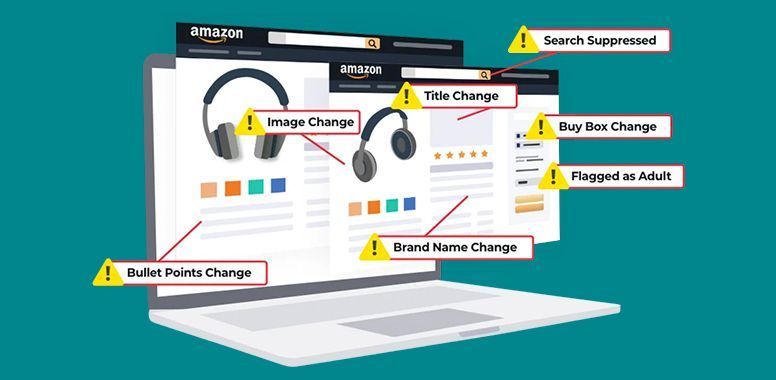
How Brands Can Recover Visibility, Improve SEO, and Restore Sales Momentum on Amazon
March 2, 2026
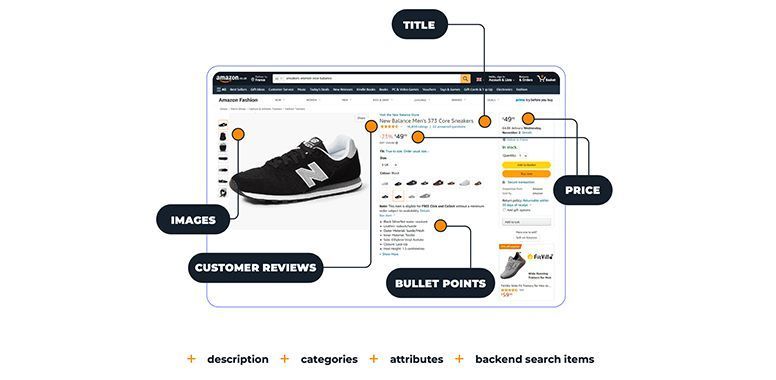
Why Clean, Accurate Catalog Data Is the Secret Weapon Behind High-Performing Amazon Listings

March 2, 2026
Pay-Per-Click Advertising (PPC) advertising has evolved from a simple optional tool into one of the most powerful levers for sellers aiming to thrive on the platform. In 2026, with Amazon's ad revenue surpassing $68 billion annually and competition intensifying across categories, PPC stands out as a wonder because it delivers immediate, measurable results.
March 2, 2026
In 2026, the way people shop has shifted dramatically. After years of economic uncertainty, inflation pressures, and endless options online, consumers are moving away from impulsive, volume-driven purchases toward intentional buying —a mindful approach where every dollar spent must earn its place. According to recent reports from NielsenIQ and other consumer insights, spending is now deeply intentional: shoppers prioritize value, quality, trust, personalization, and alignment with their values over sheer convenience or low prices alone. They ask tougher questions before clicking "Add to Cart": Does this solve a real need? Is it worth the cost? Will it last or deliver tangible benefits? This isn't about buying less for minimalism's sake—it's about buying better , with purpose, to avoid regret, support sustainability where it matters, and maximize satisfaction from each purchase.
Show More