
Amazon FBA Changes 2026: 11 Updates That Will Hit Your Profits

William Fikhman • April 1, 2026

Share this article

Currently, thousands of Amazon sellers are waking up to slimmer profit margins after Amazon rolled out 11 major FBA structural changes in the first quarter alone. The headline number everyone is talking about is the average $0.08 per-unit fulfillment fee increase that took effect recently. But that’s just the tip of the iceberg.


Amazon eliminated FBA prep and labeling services, introduced new defect penalties that jumped as high as 1,600% in some cases, shifted low-inventory fees to the SKU level, updated the Agent Policy on March 4, changed return-label requirements for seller-fulfilled orders, stopped sharing reviews across certain variations, and more. These aren’t small tweaks — they’re a complete reset of how FBA works.


Sellers who treat this as “just another fee hike” will bleed margin. Those who treat it as a strategic reset will actually gain competitive advantage in the second half of 2026. This guide breaks down every change with real numbers and gives you a simple 5-step plan you can execute.


The 11 Changes That Matter Most Right Now


Fulfillment Fee Increases
Standard-size products priced $10–$50 now cost an average
$0.08 more per unit. Small standard-size items in that range saw +$0.25, while large standard-size items only rose +$0.05.

Products under $10 got a smaller bump but still lost some of their previous discount. Multi-Channel Fulfillment and Buy-with-Prime fees also rose (average +$0.24–$0.30). Amazon claims this is still below inflation and carrier increases, but for high-volume sellers moving 5,000+ units/month, that’s an extra $400–$1,250 in monthly costs with zero warning.


FBA Prep & Labeling Services Officially Ended
Amazon no longer offers prep or labeling in the US. Sellers must now handle polybagging, bubble wrap, labeling, cartonization, and pallet standards themselves — or pay a third-party prep service. Non-compliant shipments face delays, rejection, or new inbound placement fees.


Low-Inventory Fees Now Charged at SKU/FNSKU Level
Previously calculated at the parent ASIN level. Now each variation can trigger fees independently if stock drops too low. This punishes sellers with slow-moving color/size variants.


Inbound Placement Service Fees Increased
Average +$0.05 per unit, with more pricing tiers based on how “complex” your shipment is (size, weight, destination).

New Defect & Inbound Compliance Penalties
Some categories saw defect fees jump 1,600%. Amazon now has near-zero tolerance for mislabeled or poorly packed cartons.


Agent Policy Update

Every automated tool connecting to Seller Central must now self-identify as an “automated system.” Non-compliant tools risk account suspension.


Payout Timing Pushed Back One Week

Many sellers noticed cash flow delayed by 7 full days.


Review Sharing Across Variations Tightened

Reviews will no longer automatically share across child ASINs that differ in functionality, formulation, or intended use. This hurts listings with many color/size variants.


Prepaid Return Labels Required for All Seller-Fulfilled Orders

No more exemptions — every US seller-fulfilled order must use Amazon’s prepaid return label program.


Inventory Over 12 Months Old Faces Extra Fees

Long-term storage fees are now stricter.


No New Fee Types — But More Granular Tiers

Amazon is adding pricing tiers instead of brand-new fees, which rewards efficient packaging and planning but punishes inefficient ones.


Your 5-Step Survival Plan You Can Start Today

Step 1: Run a Full Margin Audit This Week

Open Seller Central → Reports → Business Reports → Fee Preview Tool and the new Revenue Calculator (now available earlier than ever). Export the last 30 days of orders and recalculate every ASIN with the new fees. Flag any product where the new FBA cost pushes your margin below 25%. Most sellers discover 15–30% of their catalog is now unprofitable or barely breaking even. Use the free tools Amazon released in Q1 to model packaging changes before you reorder.


Step 2: Lock in Third-Party Prep Partners Immediately

Since Amazon prep is gone, vetted prep centers (or in-house setup) are now mandatory. Contact 2–3 reputable prep services this week and run a test shipment of 100 units. Negotiate volume rates now before summer rush. Top performers are moving to hybrid models: FBA for top 20% of SKUs, FBM or 3PL for the rest. This alone can save $0.15–$0.40 per unit versus new FBA rates.


Step 3: Re-Optimize Packaging & Size Tiers

The new fee structure heavily rewards “small standard” size.

Switch to lighter, smaller boxes and polybags wherever possible.

Eliminate oversized cartons that trigger higher inbound placement fees.


Test bundling slow-moving variants into multi-packs to reduce low-inventory fee exposure. Sellers who redesigned packaging in February/March are already reporting 8–12% lower effective fulfillment costs.


Step 4: Restructure PPC & Pricing to Offset Fee Pressure

With higher FBA costs, your break-even ACoS just dropped.

Shift budget to exact-match and phrase-match campaigns on your most profitable SKUs.

Use the new persona-targeting options in Amazon Marketing Cloud (AMC) to reach high-intent buyers instead of broad keywords.


Raise prices 3–7% on items that absorbed the full $0.08–$0.25 hit — data shows most buyers accept small increases if reviews and images stay strong.


Run Lightning Deals or coupons only on SKUs that still clear 30%+ margin after new fees.


Step 5: Build a Q2/Q3 Inventory & Cash-Flow Buffer

The Big Spring Sale just ended, but Mother’s Day, Memorial Day, and Prime Day prep are next.

Aim to have 60–75 days of forward cover on best-sellers by mid-April.


Use the new Profit Analytics dashboard to forecast exact cash needed after the delayed payout schedule.

Consider moving 10–20% of slow movers to FBM or Amazon MCF to avoid long-term storage fees.


Real Numbers from Sellers Who Acted Early

One mid-six-figure seller I spoke with in late March ran the audit and discovered their effective FBA cost rose 9.4% overall. By switching two SKUs to smaller polybags and raising price $1.49 on a third, they recovered 6.8% of margin within 14 days. Another brand that moved prep in-house saved $0.31 per unit and eliminated inbound rejection fees entirely.


The Bottom Line for April 2026 Onward

Amazon’s 2026 changes are not going away — but they are predictable. The sellers who win are the ones treating this as a packaging, pricing, and process reset instead of complaining about fees. Those who act in the next 30 days will enter Prime Day and Q4 with stronger margins and cleaner operations than 80% of their competition.


Start with the margin audit today. Download your fee preview report, tag every ASIN that lost money under the new structure, and schedule your first prep-partner call this week. The window to adjust before summer inventory deadlines is closing fast.


If you want my exact 2026 FBA Fee Impact Calculator spreadsheet (with the new tier tables already built in) or a ready-to-use packaging redesign checklist, just reply with “SEND TOOLS” and I’ll share them.

The game changed in January. The winners are already adapting in April.


What’s your biggest FBA fee impact right now — prep costs, low-inventory charges, or the straight per-unit increase? Drop it in the comments and I’ll help you prioritize your next move.


Conclusion

Amazon’s 2026 FBA changes are permanent and will continue squeezing margins for sellers who ignore them. The winners this year won’t be the ones complaining about higher fees — they’ll be the ones who quickly adapt their packaging, pricing, prep, and inventory strategy.

Start your margin audit this week, lock in prep partners, and execute the 5-step plan before the busy season hits. Those who act now will enter Prime Day and Q4 with stronger profits and a real competitive advantage.

Boost overall efficiency in achieving your company's strategic goals. For brand management, reach out here or book a zoom call  today.

Let’s find out how  CMO can drive your success! 


A person with short, gray hair, wearing a black shirt and a pendant necklace, smiling against a light gray background.


William Fikhman is the founder of Chief Marketplace Officer (CMO), a fractional Amazon executive agency based in Los Angeles, California. He began selling on Amazon in 2009, scaling to $5M in year one and $20M+ within two years. Over 16 years, William has managed Amazon operations for more than 100 consumer brands, overseeing $300M+ in marketplace revenue across Seller Central and Vendor Central. He founded CMO to give consumer brands access to senior-level Amazon leadership on a fractional basis — without the cost of a full-time hire or the limitations of a traditional agency. William specializes in brand protection, distribution control, Amazon PPC strategy, and marketplace operations.
Connect on LinkedIn | Book a consultation


Recent Posts

A laptop screen displaying a grid of eight amazon product graphic designs in blue and gold tones.
By William Fikhman April 1, 2026
Another major evolution is the rising importance of ad creative. In 2026, Amazon expanded video and enhanced image support across more Sponsored Products placements, including homepage and detail-page ads. Data from top-performing accounts shows that listings with strong video creatives in PPC are seeing click-through rates improve by 30-50% compared to static images alone. High-quality creatives don’t just attract clicks — they improve relevance scores in Amazon’s AI engine. A well-shot lifestyle video demonstrating your product (for example, a quick demo of isolation tweezers creating perfect lash fans) signals to the algorithm that your ad matches buyer expectations. This leads to better placement at lower costs over time. Smart sellers are now treating PPC creative as seriously as their main listing images. Testing multiple video variations, using clear text overlays, and showing real customer benefits have become standard practice for scaling campaigns profitably. The New Campaign Architecture That Actually Works Successful PPC structures in 2026 look very different from the old “auto + broad + exact” setup. Here’s the framework top sellers are using right now: Discovery Campaigns : Run auto or broad match with modest budgets to harvest fresh search terms and persona signals. These feed data into your more targeted campaigns. Defense & Brand Campaigns : Protect your own branded terms and ASINs with lower bids to maintain control and defend against competitors. Conquer & Expansion Campaigns : Target competitor ASINs, related categories, and high-intent persona segments to steal market share. Creative & Video Campaigns : Dedicated budgets for video-heavy ads to boost engagement and lower overall ACoS through better quality scores. Layering these with negative keywords harvested weekly keeps waste low. Many sellers also use automation rules to adjust bids based on ACoS targets, conversion rate thresholds, and inventory levels. The goal is no longer maximum impressions — it’s profitable, sustainable growth with controlled TACoS (Total Advertising Cost of Sales). Practical Steps to Rebuild Your PPC for 2026 If your current campaigns feel stuck, follow this 5-step reset you can start this week: Audit Your Existing Structure Pull search term reports for the last 30-60 days. Identify top-performing keywords and personas, then pause or negate anything with ACoS above your target margin. Most sellers discover 30-40% of their spend is going to low-value traffic. Build Persona Portfolios in AMC Use Amazon Marketing Cloud to create audience segments based on past purchasers, category browsers, and lifestyle signals. Test these in Sponsored Display and Sponsored Products for faster efficiency gains. Upgrade Your Creatives Create at least 3-5 video variations per hero product. Focus on clear benefits, real usage, and strong calls-to-action. Test them in rotation and keep winners. Shift Budget Toward Profitability Move more spend to exact and phrase match on proven terms while using auto campaigns only for discovery. Raise prices slightly on high-margin items if needed to absorb rising CPCs — small increases are often accepted when supported by strong listings. Monitor and Automate Weekly Set rules for bid adjustments, budget pacing, and pausing underperformers. Track TACoS alongside ACoS to ensure paid sales are truly contributing to long-term organic growth. Sellers who implemented this type of reset in Q1 2026 are already seeing ACoS improvements of 10-20% while maintaining or increasing sales volume. Real Results from Sellers Adapting Now One mid-sized beauty brand selling lash tools reported that after switching to persona + video-focused campaigns in February, their overall PPC ACoS dropped from 42% to 31% within six weeks. Another supplement seller using multi-collagen capsules moved 25% of budget into AMC persona targeting and recovered an extra $8,000 in monthly profit by reducing wasted clicks. These aren’t isolated cases. Across categories like beauty tools, supplements, photography accessories, and apparel, the pattern is clear: brands embracing the new intent-driven PPC model are pulling ahead. Final Takeaway Amazon PPC in 2026 is no longer about who bids the highest on popular keywords. It’s about who best understands their buyer, delivers compelling creative, and builds intelligent campaign structures that align with Amazon’s AI signals. The transition feels challenging at first, but it rewards sellers who focus on quality over quantity. Those who invest time now in auditing, testing creatives, and building persona strategies will enjoy lower costs, higher conversions, and stronger organic rankings as paid velocity feeds the A10 algorithm. Don’t wait for your competitors to figure it out. Audit one campaign this week, create your first video ad, and test a simple persona segment. The sellers winning in 2026 aren’t necessarily spending more on ads — they’re simply spending smarter. Start rebuilding today. The PPC landscape has changed, and the opportunity belongs to those who adapt fastest. What’s your biggest PPC struggle right now — rising costs, low conversions, or campaign structure? Reach out here or book a zoom call today. We’ll help you prioritize your next optimization move.
By William Fikhman March 3, 2026
Master Amazon SEO in 2026 with proven tactics from CMO's fractional Amazon experts. Covers A9 algorithm, behavioral ranking, keywords, and listing optimization.
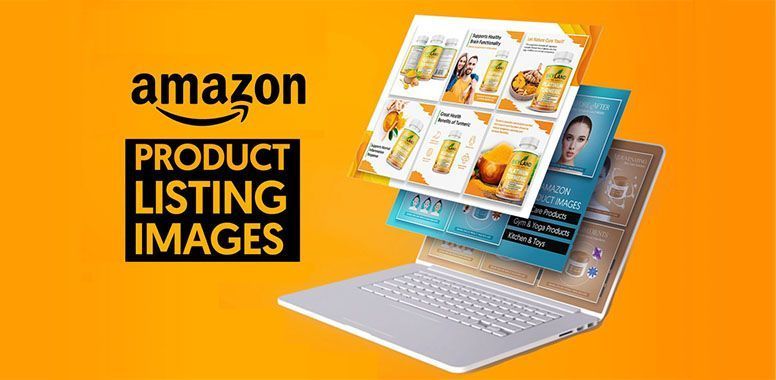
An Amazon logo and text
By William Fikhman March 3, 2026
Amazon product images drive clicks and conversions. Learn why visuals are your most powerful selling tool and how CMO creates images that win the buy box.

A mobile app interface displaying a search bar with the text
By William Fikhman March 2, 2026
Amazon Rufus is an AI shopping assistant changing how products get discovered. Here's what every brand must do now to stay visible in AI-driven search results.
An Amazon logo on a box next to three blue-gradient bar charts and two circular, textured data icons.
By William Fikhman March 2, 2026
Amazon's 2026 fee structure changed on January 15. Learn what shifted, what it costs your brand, and how a fractional Amazon agency protects your margins.

A pink icon of a shopping cart with a credit card inside, encircled by two rotating arrows, labeled
By William Fikhman March 2, 2026
Amazon's algorithm now rewards conversion behavior over keyword stuffing. Learn how CMO helps brands adapt their listings and ads to rank for what actually sells.

The Amazon logo next to a graphic of a human brain with a yellow
By William Fikhman March 2, 2026
As Amazon automates more, brand authenticity is your edge. Learn how top consumer brands stand out in AI-driven search and convert at higher rates with CMO.
A digital illustration of a laptop screen displaying Amazon product pages with yellow warning icons highlighting edits.
By William Fikhman March 2, 2026
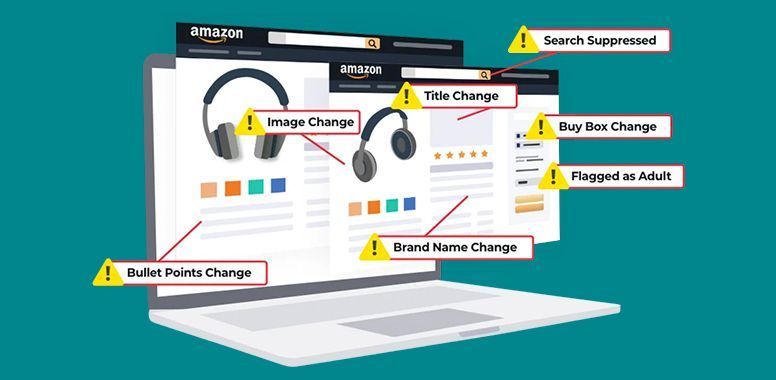
Suppressed Amazon listings kill revenue. Learn how CMO uses catalog data to recover visibility, fix compliance issues, and restore sales momentum fast.
An Amazon product page diagram with labels for images, title, price, bullet points, customer reviews, and other metadata.
By William Fikhman March 2, 2026
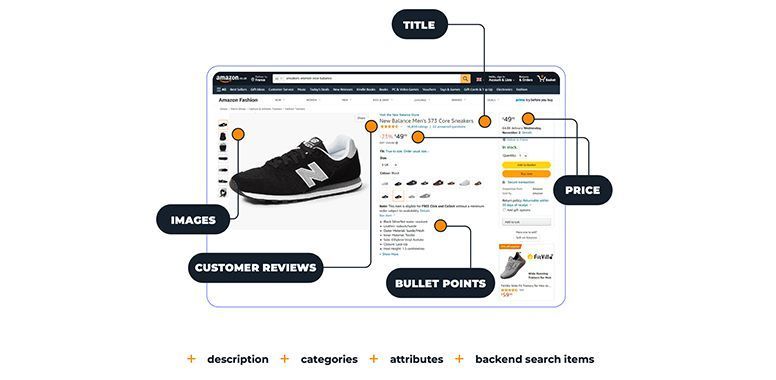
Clean Amazon catalog data is the hidden driver of search rankings. Learn how accurate titles, attributes, and browse nodes improve your listing performance.
Flat illustration showing a computer, a tablet, and a mouse with icons of coins and a cursor, captioned
By William Fikhman March 2, 2026
Amazon PPC drives immediate, measurable results. Learn how CMO structures Sponsored Products, Sponsored Brands, and Sponsored Display campaigns that scale profitably.
Show More